
IBISWorld Platform
Answer any industry question in minutes with our entire database at your fingertips.

IBISWorld forecasts the CPI to average 106.8 index points in 2026-27, which represents a 2.8% rise over the previous year. While still elevated, this marks a moderation from the 3.9% increase recorded in 2025-26. Inflation has eased as the surge in global oil prices that followed the supply disruption in the wake of the US-Israel conflict with Iran has begun to unwind, and as the Federal Government's temporary cut to the fuel excise in April 2026 flowed through to lower transport costs. Even so, growth is set to remain near the top of the RBA's target band. Service prices, particularly childcare, accommodation and travel, have continued to climb, while elevated housing costs and residential construction expenses remain significant contributors to inflation. The lagged effect of the RBA's interest rate increases through to May 2026 has weighed on consumer demand, helping to contain broader price pressures.The CPI rose at multi-decade-high rates over the two years through 2022-23, driven by global supply chain disruptions, strong post-pandemic demand and a sharp increase in housing costs, exacerbated by sizable government stimulus programs and easy monetary policy. The RBA's decisions to raise the cash rate in an effort to manage this rampant inflation – from May 2022 through to late 2023 – weighed on consumer spending and had a flow-on impact on inflation, ultimately allowing for cuts in February, May and August 2025. However, this easing cycle reversed in early 2026 as inflation pushed back above the RBA's target band, leading to a renewed rise in interest rates. The expiry of the Federal Government's electricity rebates at the end of 2025 placed further upwards pressure on headline inflation. According to the RBA's May 2026 and February 2026 monetary policy statements, rising inflation was driven particularly by fuel and energy prices and services, retail goods and residential building construction. It also highlighted capacity constraints, including a tight labour market, elevated unit labour costs and weak productivity, as factors amplifying inflationary pressures. Factors like global oil prices, the labour market, domestic demand and interest rates will continue to heavily influence CPI growth over the coming quarters.The RBA uses monetary policy tools to maintain the inflation rate within a desired target band of 2-3%. The RBA's tools for controlling inflation have a lagged effect and forecasting errors make it difficult to estimate future inflation, so fluctuations can occur. In the short-term, by using monetary policy to cut interest rates, the RBA can stimulate demand for goods and services and drive economic growth, ultimately achieving a lower unemployment rate. The RBA seeks to average the target range for the inflation rate over the economic cycle. This allows for a higher inflation rate during part of the economic cycle to maintain full employment. Concerns that inflation will exceed the targeted range have led many central banks worldwide to adjust the pace of interest rate changes, with the RBA following suit. Inflationary pressures began to ease in 2024, prompting central banks, including the RBA, to cut rates. However, this trend reversed in Australia in the second half of 2025, with inflation rising above the RBA's target band, leading to rate hikes in the first half of 2026.Real GDP and residential housing prices have lifted over the past five years, supporting growth in the CPI. Furthermore, the Federal Government's fiscal policies and the RBA's monetary policies have supported CPI growth over the past five years, particularly during the pandemic. While public demand has been a key contributor to economic growth over most of the past five years, private demand has recovered as household consumption strengthens. Overall, IBISWorld forecasts the CPI to increase at a compound annual rate of 4.0% over the five years through 2026-27.
Curious about what drives these trends? IBISWorld's analyst coverage on the consumer price index includes detailled analysis on the current performance, outlook and industries affected.
1960-2034
This report analyses the value of the consumer price index (CPI). The CPI measures the price of a basket of goods consumed by the average Australian, and is the standard measure of the rate of inflation in Australia. Indexes are calculated for each of the capital cities and are then combined as a weighted average to obtain a nationwide value. This report uses the average quarterly value of the index over each financial year. The data for this report is sourced from the Australian Bureau of Statistics and is measured in points, with a base of 100.0 points in 2024-25.
IBISWorld Industry Reports are available in multiple formats to fit seamlessly into your workflow.

Answer any industry question in minutes with our entire database at your fingertips.
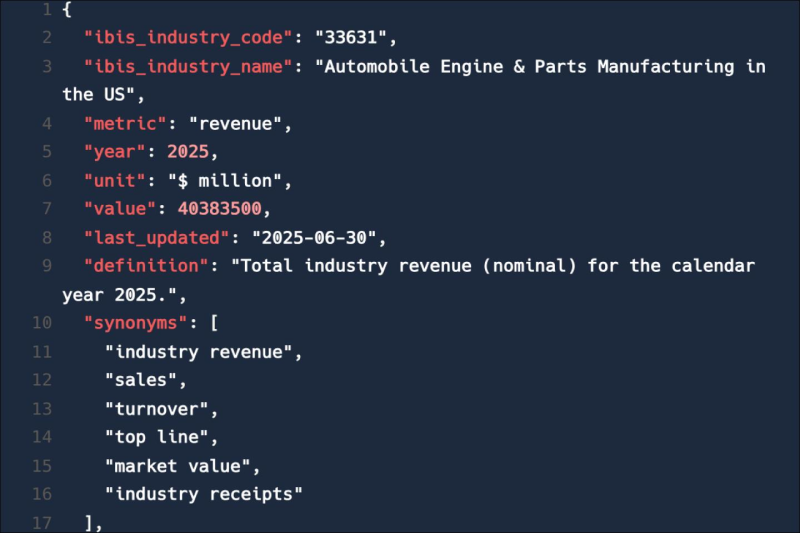
Feed trusted, human-driven industry intelligence straight into your platform.
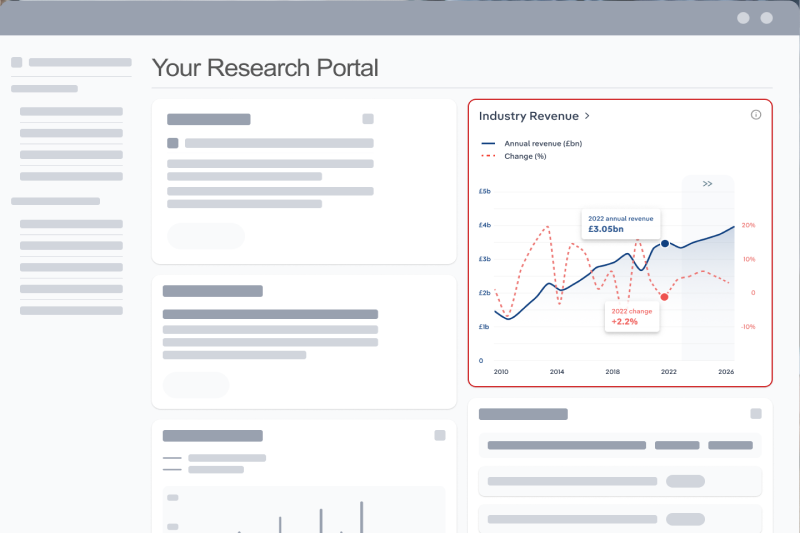
Streamline your workflow with IBISWorld’s intelligence built into your toolkit.
Explore industries with similar markets, supply chains, and economic drivers to gain broader context and insights.
| Industry | Country | Last 5-yr CAGR | Forecast 5-year CAGR | Revenue |
|---|---|---|---|---|
| Funeral, Crematorium & Cemetery Services in Australia |
|
XX% | XX% | $XX |
When the stakes are high, you need intelligence that cuts through the noise—wherever you work.
The consumer price index in Australia in 2027 was 106.8 index points.
The consumer price index in Australia grew by 4.04% in 2027.
IBISWorld’s data and analysis on consumer price index in Australia includes forecasted growth rates over the next five years.