
IBISWorld Platform
Answer any industry question in minutes with our entire database at your fingertips.

IBISWorld forecasts private health insurance membership to inch upwards by 1.6% in 2026-27, to reach 1.849 million people. In New Zealand, private health insurance membership is supported by employment levels, as it is subsidised by employers. Prospective improvements in labour market conditions following recent employment pressures linked to global supply disruptions from the US–Israel conflict with Iran are expected to support renewed growth in private health insurance uptake. The high-interest-rate environment and inflationary pressures are also forecast to gradually subside this year, supporting economic activity and higher household incomes. Subsequently, this trend is expected to contribute to growth in private health insurance membership.The pandemic led to the temporary suspension of non-urgent elective surgery to free up capacity and resources. Although some people were unable to use services covered by their policy, these circumstances did not cause private health insurance coverage to decline across the population. To the contrary, the uncertainty due to the pandemic led more people to take out private health insurance over its course. With steady population growth, low unemployment and rising real household discretionary incomes, the number of New Zealanders with health insurance coverage remained high in 2021-22, despite rising premiums and periods of reduced capacity to undergo elective procedures.New Zealand residents and some visa holders are entitled to healthcare, free of charge or at a low cost, under a public health system. Private health insurance is primarily used by membership holders to supplement services available in the public health system. Private health insurance coverage offers consumers a range of benefits not offered by the public system, like private hospitals and clinics, choice of doctor and shorter waiting periods.Over the past five years, the number of people with private health insurance membership has declined slightly but remains high. The level of awareness of physical and mental health among the population has grown, supporting rising membership rates as people have taken proactive steps to look after their health. Employer-subsidised private health insurance has also driven increasing coverage over the period. Furthermore, a greater share of older New Zealanders have taken up coverage as elective surgery within the public health system has become increasingly inaccessible. Private providers are able to leverage relatively predictable demand for such procedures, encouraging demand.At the same time, health insurance premiums have climbed over the past few years, driven by mounting inflation that has driven up medical costs and increased service use across the country. As real household discretionary income has stuttered in recent years, health insurers have found it more difficult to expand their coverage, limiting growth in uptake. Overall, IBISWorld forecasts private health insurance membership to edge upwards marginally at a compound annual rate of 0.4% over the five years through 2026-27.
Curious about what drives these trends? IBISWorld's analyst coverage on the private health insurance membership includes detailled analysis on the current performance, outlook and industries affected.
2006-2034
This report analyses the number of people who are covered by comprehensive, minor medical or elective surgical private health insurance in New Zealand. The data for this report is sourced from the Ministry of Health (Manatu Hauora) and from the Financial Services Council of New Zealand. The Private Health Insurance Membership is measured in millions of people covered at the end of each financial year.
IBISWorld Industry Reports are available in multiple formats to fit seamlessly into your workflow.
Answer any industry question in minutes with our entire database at your fingertips.

Feed trusted, human-driven industry intelligence straight into your platform.
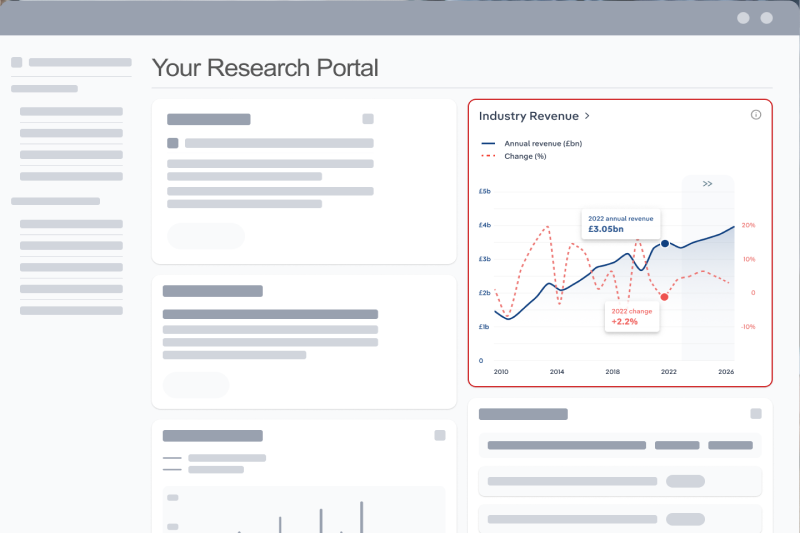
Streamline your workflow with IBISWorld’s intelligence built into your toolkit.
Explore industries with similar markets, supply chains, and economic drivers to gain broader context and insights.
| Industry | Country | Last 5-yr CAGR | Forecast 5-year CAGR | Revenue |
|---|---|---|---|---|
| Health Insurance in New Zealand |
|
XX% | XX% | $XX |
| Hospitals in New Zealand |
|
XX% | XX% | $XX |
| Optometry & Optical Dispensing in New Zealand |
|
XX% | XX% | $XX |
| Dental Services in New Zealand |
|
XX% | XX% | $XX |
| Physiotherapy Services in New Zealand |
|
XX% | XX% | $XX |
| Specialist Medical Services in New Zealand |
|
XX% | XX% | $XX |
When the stakes are high, you need intelligence that cuts through the noise—wherever you work.
The private health insurance membership in New Zealand in 2027 was 1.85 millions of people.
The private health insurance membership in New Zealand grew by 0.44% in 2027.
IBISWorld’s data and analysis on private health insurance membership in New Zealand includes forecasted growth rates over the next five years.