
IBISWorld Platform
Answer any industry question in minutes with our entire database at your fingertips.

Over the five-year period through 2025-26, fruit and vegetable prices are forecast to increase at a compound annual rate of 5.4%, to reach 136.5 points. In the UK, fruit and vegetables are somewhat of an expensive commodity considering many types and variants of fruit and vegetables cannot be grown domestically and must therefore be imported at a relatively significant expense. According to Defra, the food production to supply ratio of the United Kingdom, colloquially known as the "self-sufficiency ratio" and calculated as the farm-gate value of raw food production divided by the value of raw food for human consumption, was estimated to be 60% for all food and 75% for foods that can be produced domestically in 2020. However, self-sufficiency in fruit and vegetables are lower at 16% and 54% respectively.Fruit and vegetable prices fluctuate in tandem with supply relative to demand and, if sourcing fruit and vegetable from overseas, exchange rate volatility, distribution and fuel costs, and potential third-country tariffs are notable factors that influence price movement. The market supply of fruit and vegetables depends on the volume and quality of yield in key growing regions, both domestically and overseas, which are in turn reliant on the favourability for growing conditions each year. Meanwhile, the purchasing power of supermarkets, specifically when negotiating contracts with upstream suppliers, leverages a degree of control over the consumer price of fruit and vegetables. As a result of this, the majority of producers are price takers. Underlying demand for fruit and vegetables in consumer end markets is sensitive to changes in income, trends in health consciousness, and attitudes regarding the "sustainable sourcing" or otherwise "local sourcing" of fruit and vegetables.Fruit and vegetable prices fell during 2020-21 despite a sharp increase in demand mainly due to supermarket price wars. These firms resulted to price matching with other retailers in order to remain competitive, which placed downward pressure on margins. From April 2021, lockdown measures were eased gradually supporting demand from the food service sector, placing upward pressure on prices. In 2021-22, the price of fruit and vegetables in the United Kingdom expanded by 2.4%.The pandemic resulted in severe market disruption and logistics issues across the economy, including vegetable distribution has not been immune. Temporary border closures, suspended visas by way of travel bans, and other measures ultimately intended to contain and mitigate the spread of coronavirus (e.g. mandated social distancing measures) have all combined to induce an unprecedented exogeneous shock to the economy. Relative to fruit and vegetable prices, prices have inflated due to numerous factors, including a spike in demand, with many downstream consumers "panic buying" during the initial lockdown period; and limited supply, as temporary closures across the logistics industry and limited availability of seasonal workers - this left fruit and vegetable farmers unable to accelerate output and cater for a sharp upturn in demand - forced retailers to find alternative suppliers, an often costly endeavour whereby heightened overheads are reimbursed via in final selling prices. Irrespective of supply chain cost pressures, however, any would-be exponential inflation in the price of fruit and vegetables has been, to a certain extent, counterbalanced by food retailer pricing strategies in response to the implications of the pandemic. In 2022-23, severe hot weather and strong inflationary pressure has driven prices of food, including fruit and vegetables. According to the ONS, CPI inflation reached 11.2% in October 2022, driving up input prices. According to Defra, fruit and vegetable prices expanded on average by 37% in the first three months of 2022, when compared to the same period in 2020. Prices are easing as supply chain issues ease, but the index is set to rise by 1.4% in 2025-26. The expansion in more people buying organic produce is pushing up prices of fruit and vegetables.
Curious about what drives these trends? IBISWorld's analyst coverage on the fruit and vegetable prices includes detailled analysis on the current performance, outlook and industries affected.
2000-2032
This report analyses fruit and vegetable prices in the United Kingdom. The data is sourced from the Office for National Statistics (ONS) and the Department for Environment, Food and Rural Affairs (Defra), in addition to estimates by IBISWorld. The data, as per ONS and Defra records, is a derivative of the consumer price index (CPI) and represents a weighted average of the fruit and vegetable price indices components of the CPI, with 2015 as the base year (i.e. calendar year 2015 = 100). The weighing is based on the weights attributed to the two indices by the ONS in the calculation of the overall CPI. Figures are an annual average over each financial year (i.e. April through March).
IBISWorld Industry Reports are available in multiple formats to fit seamlessly into your workflow.

Answer any industry question in minutes with our entire database at your fingertips.
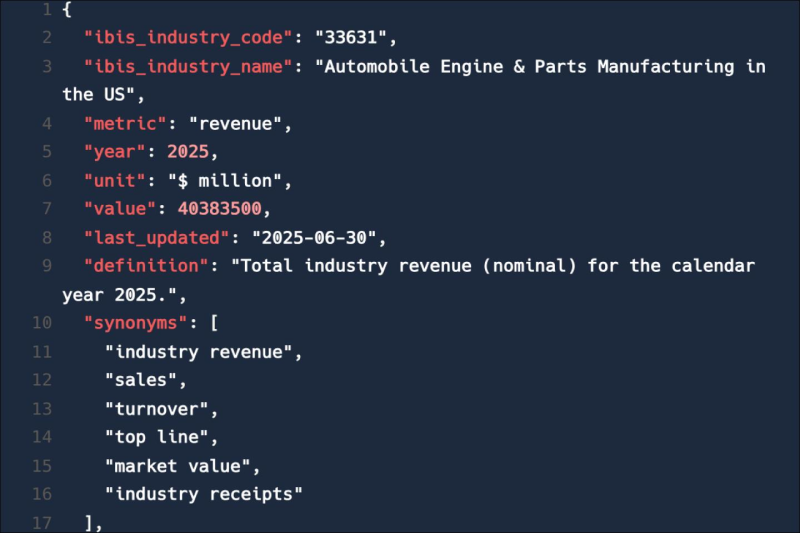
Feed trusted, human-driven industry intelligence straight into your platform.
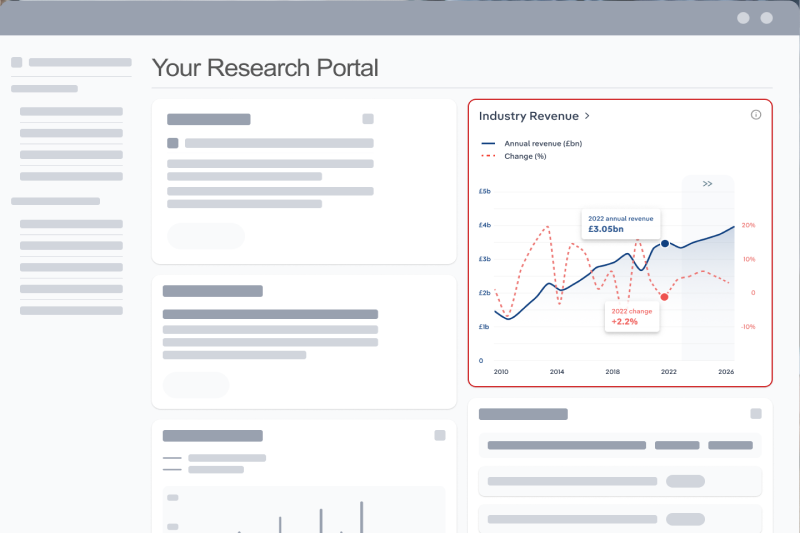
Streamline your workflow with IBISWorld’s intelligence built into your toolkit.
Explore industries with similar markets, supply chains, and economic drivers to gain broader context and insights.
| Industry | Country | Last 5-yr CAGR | Forecast 5-year CAGR | Revenue |
|---|---|---|---|---|
| Food-Service Contractors in the UK |
|
XX% | XX% | $XX |
| Fruit Growing in the UK |
|
XX% | XX% | $XX |
| Fruit & Vegetable Processing in the UK |
|
XX% | XX% | $XX |
| Cider Production in the UK |
|
XX% | XX% | $XX |
| Fruit & Vegetable Wholesaling in the UK |
|
XX% | XX% | $XX |
| Juice Production in the UK |
|
XX% | XX% | $XX |
When the stakes are high, you need intelligence that cuts through the noise—wherever you work.
The fruit and vegetable prices in the UK in 2026 was 136.5 index points.
The fruit and vegetable prices in the UK grew by 5.35% in 2026.
IBISWorld’s data and analysis on fruit and vegetable prices in the UK includes forecasted growth rates over the next five years.