
IBISWorld Platform
Answer any industry question in minutes with our entire database at your fingertips.

Subsequent to a 3% year-on-year decline in 2015-16, as the government deployed austerity measures to improve public finances, government capital expenditure rebounded by 4.5% in 2016-17, as preceding promises of investing in the future productive output of the UK economy, to a certain extent, eventually came to fruition. Additional capital spending (i.e. longer-term spending on physical assets) was transferred from current spending (i.e. short-term expenditure to be renewed annually), such that total current spending would fall by £3 billion per year, albeit result in capital expenditure growth explicitly. Government capital expenditure went on to increase in 2017-18 (2.8%), and again in 2018-19 (4.4%), in large part due to government capital investment earmarked in the National Infrastructure Delivery Plan (NIDP) 2016-2021 coming to fruition. However, as economic uncertainty ensued and heightened subsequent to the June 2016 referendum vote, which resulted in the United Kingdom withdrawing from the EU bloc - after several delays, the United Kingdom left the European Union in January 2020 and kick started a transition period through December 2020 - the government grew cautious with regards to committing big-ticket capital investment. With capital projects being delayed, government capital expenditure declined by 0.7% year-on-year in 2019-20.In 2020-21, however, government capital expenditure grew by 16.4% year-on-year, reaching £68.4 billion. In order to meet promises of turning the page on austerity made by the Conservative government, public-sector capital expenditure was heightened, particularly in areas of healthcare and education buildings, transport assets and social dwellings. More prominently, however, measures outlined in Budget 2020 - announced in March 2020 - and in subsequently announced policy were centred around a response to counter the economic shock caused by the COVID-19 (coronavirus) pandemic. First identified towards the tail-end of the 2019 calendar year, the coronavirus pandemic spread globally, with the domestic situation effectively worsening in February 2020 and thereafter; the World Health Organisation (WHO) officially declared the outbreak a pandemic in March 2020. As of April 2022, the coronavirus pandemic remains a significant threat to public health and, to date, has severely disrupted supply chains, currency markets, stock markets, commodity markets, consumer demand and business activity. While the UK and global economic enduring a period of lacklustre economic prospects, Chancellor of the Exchequer Rishi Sunak, in Budget 2020, announced the biggest increase in government borrowing for 30 years and ended a decade of Conservative austerity in an effort to counter the economic shock of the coronavirus outbreak. Budget 2020 included a £12 billion emergency fiscal stimulus, on top of £18 billion already earmarked for public spending not related to tackling the effects of the virus; public-sector net investment is set to rise from close to 2% of national income to 3%. Following on from 2020-21, the UK's level of government capital expenditure rose by a further 9% in 2021-22.Published on 25 November 2020, the Spending Review 2020 (SR20), while prioritising funding to support the government's response to COVID-19, also "maintains momentum on the government's infrastructure plans with select multi-year capital settlements". As stated by the government in SR20, "by prioritising capital investment now when the cost of borrowing is low by historic standards and when returns are greatest, SR20 paves the way for record levels of capital investment across this parliament and beyond – driving economic recovery so we can build a stronger future across the whole of the UK".
Curious about what drives these trends? IBISWorld's analyst coverage on the government capital expenditure includes detailled analysis on the current performance, outlook and industries affected.
2001-2032
This report analyses general government capital expenditure in the United Kingdom. The data is sourced from the Office for National Statistics (ONS) and is presented in fiscal years (i.e. April through March). The data is adjusted for seasonal variations and deflated using chain volume measures. Forecast figures are based on data from the Office for Budget Responsibility's (OBR) 'Economic and fiscal outlook', published in November 2020, in addition to estimates afforded by IBISWorld. The data includes a one-off negative £15.6 billion transfer of nuclear reactors from British Nuclear Fuels Limited (BNFL) to the Nuclear Decommissioning Authority (NDA) in April 2005.Patterns in government capital expenditure are largely influenced by the UK government's approach to achieving its macroeconomic targets. Government capital expenditure is measured as the net increase in fixed capital and contributes to overall economic growth as gross fixed capital formation (GFCF), a component of the expenditure measure of Gross Domestic Product (GDP). GFCF includes spending on land improvements, machinery, and equipment purchases, and the construction of roads, railways, private residential dwellings and commercial and industrial buildings; disposal of fixed assets is deducted from the total. Overall, government capital expenditure is forecast to increase at a compound annual rate of 3.4% over the five-year period through 2026-27.
IBISWorld Industry Reports are available in multiple formats to fit seamlessly into your workflow.

Answer any industry question in minutes with our entire database at your fingertips.
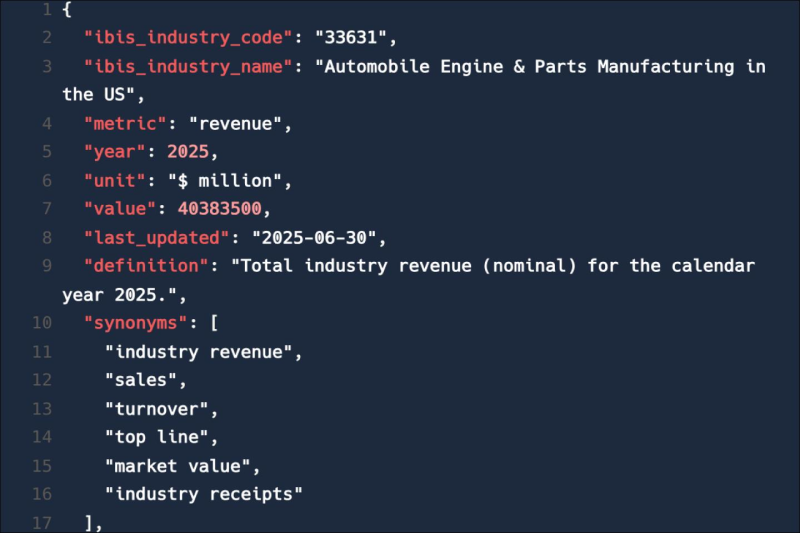
Feed trusted, human-driven industry intelligence straight into your platform.
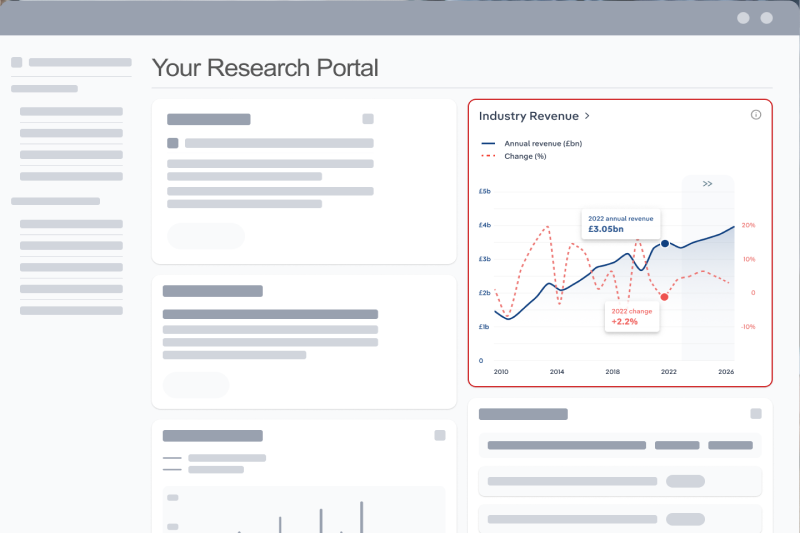
Streamline your workflow with IBISWorld’s intelligence built into your toolkit.
Explore industries with similar markets, supply chains, and economic drivers to gain broader context and insights.
When the stakes are high, you need intelligence that cuts through the noise—wherever you work.
The government capital expenditure in the UK in 2027 was 99.5 £ billion.
The government capital expenditure in the UK grew by 3.37% in 2027.
IBISWorld’s data and analysis on government capital expenditure in the UK includes forecasted growth rates over the next five years.