
IBISWorld Platform
Answer any industry question in minutes with our entire database at your fingertips.

In 2016-17, the UK mortgage interest rate contracted by 0.31 percentage points (pps); this was predominantly the knock-on effect of the decision made by the BoE Monetary Policy Committee (MPC) to cut the base interest rate – otherwise referred to as the official bank rate – to a then-record low 0.25% on 4 August 2016. The BoE MPC cut interest rates for the first time in more than seven years as part of a package of measures designed to prevent a post-Brexit recession. Despite interest rates subsequently rising for the first time in more than 10 years on 2 November 2017 – the BoE MPC raised the official bank rate to 0.5% - the annual average mortgage interest rate contracted by a further 0.11 pps in 2017-18. The governor of the BoE at the time stated the BoE expected banks to pass on the rate rise to savers, albeit said many mortgages would not see an immediate impact; British households had been "savvy" with their finances and taken out fixed-rate mortgages, meaning there was a delay before the rate rise had an impression on these mortgages. On 2 August 2018, however, the BoE hiked the base interest rate to 0.75% - the highest level since 2009 – citing concern that the lowest unemployment rate since the mid-1970s risked re-igniting wage pressure. Consequently, the decision to raise the official bank rate triggered increases in borrowing costs across the economy, as mortgage lenders and commercial banks inflated their own interest rates, and this time, an inflation in mortgage interest rates did come to fruition. In 2018-19, the average annual UK mortgage interest rate inflated by 0.24 pps, representing the first increase in the average annual rate since 2012-13 (+0.18 pps).In 2019-20, the average mortgage interest rate over the financial year reverted into decline, falling by 0.21 pps; this was in large part due to fierce competition in the mortgage market, as interest in property continued to swell, and also the product of market expectations that rates may stay low against historical standards, should housing transaction activity remain high to keep the marketplace competitive. Moreover, an overall decline during the financial year was given further impetus by emergency monetary policy in Q1 2020 in reaction to a market shock caused by the COVID-19 (coronavirus) outbreak. In response to immediate disruption to supply chains, stock markets, commodity markets, currency markets, consumer demand, business activity and so forth, the BoE announced an emergency cut to the official bank rate on 11 March 2020, from 0.75% to 0.25% and taking borrowing costs back down to their then-lowest level in history; just eight days later on 19 March 2020, the BoE MPC opted to slash the rate again to a new record low of 0.1%. With the ultimate intention of stimulating market activity and driving domestic demand at a time of major economic uncertainty and downturn, the BoE's decision to cut the cost of borrowing had a knock-on effect on the mortgage interest rate, effectively preventing the latter from any wild movement heading into the new financial year.Despite the base interest rate remaining at its record-low 0.1% level for an extended period, the annual average mortgage interest rate increased by 0.12 pps over 2020-21. After an intermittent jump in May 2020, the average monthly mortgage interest rate grew for four consecutive months through October 2020, peaking at 1.94% - the rate had not been higher in a given month since August 2015 (1.95%) - before declining month-on-month for the remainder of the fiscal year. The spike in the rate, despite the lower cost of borrowing on wholesale money markets and despite low interest rates being passed on to existing homeowners with variable interest loans by mortgage lenders, was driven by a combination of banks and building societies being cautious with new lending and tightening criteria, in turn limiting the availability of many low-interest mortgage deals from the market, and stimulatory policies being introduced, in particular the Stamp Duty Land Tax (SDLT) holiday through September 2021. Introduced in July 2020 to help homebuyers and boost the UK property market during the pandemic, the SDLT holiday temporarily reduced the initial cost of purchasing a home; yet, while interest in property was boosted by the SDLT holiday, the limited availability of low-interest mortgages at the onset of the pandemic initially meant many homebuyers accepted higher interest loans to capitalise on short-term policy support and short-term cost savings. Nevertheless, with the base interest rate being held at a record-low until December 2021, and with mortgage lenders tentatively easing lending criteria after the initial shock of the pandemic, the monthly average mortgage interest rate fell month-on-month between November 2020 and September 2021 inclusive.Having contracted through H1 2021-22, the mortgage interest rate contracted by 0.14 pps over the full fiscal year to average 1.50%; however, the monthly average rate started to increase in October 2021 and continued to creep upwards month-on-month through March 2022; in March 2022, the monthly average mortgage interest rate broke the 2% mark (2.11%) for the first time since January 2015 (2.01%), and expanded again in April 2022 (2.35%). As the economy has reopened, inflationary pressures have mounted and, compounded by supply-side factors (e.g., further supply chain disruptions borne out from the Russia-Ukraine conflict), the consumer price index (CPI) 12-month inflation rate rose to 7% in March 2022. In an attempt to negate exponentially increasing prices, the BoE MPC opted to raise the base interest rate on 16 December 2021 (0.25%), 3 February 2022 (0.5%), 17 March 2022 (0.75%) and 5 May 2022 (1%). With regards to the mortgage interest rate, inflation and in turn a tightening of monetary policy has had a knock-on effect. Should inflationary pressures remain significant and or intensify, further tightening of monetary policy, which markets are braced for, could raise the average mortgage interest rate to a level not witnessed since the financial crisis. In 2022-23, the average annual UK mortgage interest rate is forecast to expand by 1.24 pps to reach 2.92%.
Curious about what drives these trends? IBISWorld's analyst coverage on the mortgage rate includes detailled analysis on the current performance, outlook and industries affected.
2000-2033
IBISWorld Industry Reports are available in multiple formats to fit seamlessly into your workflow.

Answer any industry question in minutes with our entire database at your fingertips.
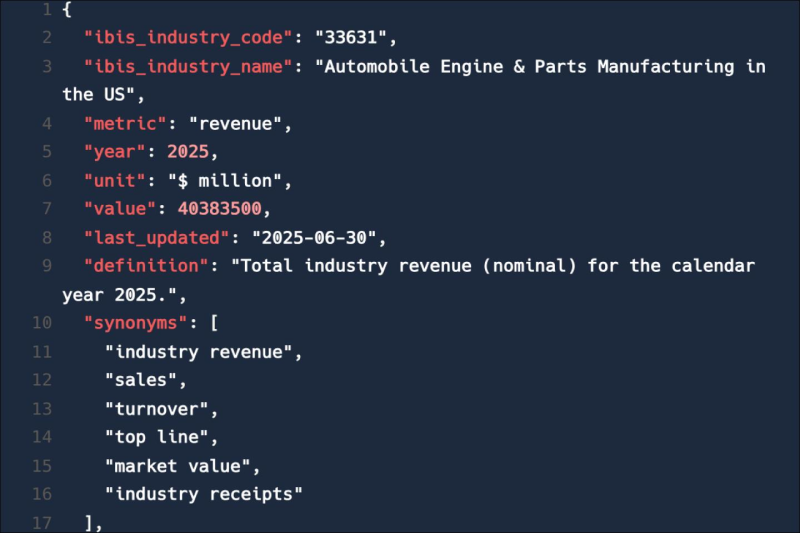
Feed trusted, human-driven industry intelligence straight into your platform.

Streamline your workflow with IBISWorld’s intelligence built into your toolkit.
Explore industries with similar markets, supply chains, and economic drivers to gain broader context and insights.
| Industry | Country | Last 5-yr CAGR | Forecast 5-year CAGR | Revenue |
|---|---|---|---|---|
| Residential Real Estate Agents in the UK |
|
XX% | XX% | $XX |
| Mortgage Brokers in the UK |
|
XX% | XX% | $XX |
| Property Auction Houses in the UK |
|
XX% | XX% | $XX |
| Countertop Manufacturing in the UK |
|
XX% | XX% | $XX |
| Kitchen Furniture Manufacturing in the UK |
|
XX% | XX% | $XX |
| Quantity Surveying Services in the UK |
|
XX% | XX% | $XX |
| Estate Agents in the UK |
|
XX% | XX% | $XX |
| Plastering in the UK |
|
XX% | XX% | $XX |
| Roofing Activities in the UK |
|
XX% | XX% | $XX |
| Bricklaying & Other Specialised Construction Services in the UK |
|
XX% | XX% | $XX |
| Painting in the UK |
|
XX% | XX% | $XX |
| Scaffolding Services in the UK |
|
XX% | XX% | $XX |
| Hardware & Home Improvement Stores in the UK |
|
XX% | XX% | $XX |
| Security System Services in the UK |
|
XX% | XX% | $XX |
| Site Preparation in the UK |
|
XX% | XX% | $XX |
When the stakes are high, you need intelligence that cuts through the noise—wherever you work.
The mortgage rate in the UK in 2027 was 5.24 percentage.
The mortgage rate in the UK grew by 0.75% in 2027.
IBISWorld’s data and analysis on mortgage rate in the UK includes forecasted growth rates over the next five years.