
IBISWorld Platform
Answer any industry question in minutes with our entire database at your fingertips.

IBISWorld estimates that the real price of off-trade alcohol will decrease at a compound annual rate of 3.1% over the five years through 2025-26 to 56.2. Off-trade or off-licence alcohol is alcohol which is sold or consumption not on the premise where it is sold, therefore excludes alcohol sold in pubs, bars, restaurants, theatres and cinemas. Duty on beer was frozen in March 2016 after three consecutive years of cuts. Cider and spirits duties were also frozen in 2016 after a cut in 2015. Wine duty was frozen in 2015 but was increased in 2016. However, since March 2017, duty on beer, cider, wine and spirits has been increased in line with the rate of RPI.Competition among retailers of off-trade alcohol has increased and price discounting is a common feature of the market, particularly on beer. Market saturation has also weighed on prices over the past decade as large supermarkets seek to maintain market share. This trend has continued putting downward pressure of the price of alcohol compared to all other items.In May 2018, the Scottish government introduced minimum unit pricing for alcohol aimed at curbing the sale of cheap alcohol. In Scotland, one unit of alcohol must be sold for 50 pence or more, regardless of the drink. The same minimum pricing threshold was implemented in Wales on 2 March 2020. In Scotland, the policy led to a reduction in sales with a higher proportion of the population drinking less.At the Spring Budget 2017, it was announced that all alcohol duty rates would rise in line with RPI inflation from 13 March 2017, effectively ending a freeze that had protected beer and spirits from further duty increases. However, being in line with inflation, these increases did not have an impact in real terms. As a result, real prices of off-trade alcohol continued falling over the year through 2017-18, albeit at a slower rate of 1.2% on the previous year. In the Autumn budget of 2018, beer, cider and spirits duty was frozen while the cost of a bottle of wine was increased. The 2020 budget included a planned increase in duty on beers and spirits, while tax on all other alcoholic drinks were frozen. This plan was scrapped due to the coronavirus outbreak and lockdown measures that followed, which caused significant economic shock.As part of measures to stem the spread of the virus, the government issued a stay-at-home order which led to the closure of pubs, bars and restaurants leading to higher demand for off-trade alcohol. Rising infection rates led to local and national lockdown measures being implemented in December 2020, which kept non-essential businesses closed include in the food service sector. As consumer spending fell, supermarkets seeking to preserve their market share engaged in more discounting which reduced prices during 2020-21. From April 2021, lockdown measures were eased in phases leading to the reopening of food service establishments, leading to more alcohol purchased in these businesses that reopened at full capacity.In July 2022 it was announced that plans to reduce duty on alcohol will not be announced until autumn, most likely due to uncertainty surrounding who will make up the next government. One proposed plan included a 5% reduction in the duty paid on draught beer, to bring give it an advantage compared to off trade prices. However, this delay is somewhat welcomed given inflation is already at a 40 year high, and the treasury needs to ensure any reform does contribute to higher off trade prices. Despite this, off-trade prices are forecast to fall by 2.1% in 2025-26, to reach 56.2 points.
Curious about what drives these trends? IBISWorld's analyst coverage on the off-trade alcohol prices includes detailled analysis on the current performance, outlook and industries affected.
2000-2030
This report analyses the real price of off-trade alcohol in the United Kingdom. The data is sourced from the Office for National Statistics (ONS) in addition to estimates by IBISWorld. The data is calculated from the components of the Retail Price Index (RPI) and is a weighted average of the off-trade beer, wine and spirits indices. The weighting is based on the weights attributed to the two indices by the ONS in the calculation of the RPI. The data represents real price changes, in that the price index is calculated relative to the price of other goods and services. Figures are annual averages over each financial year.
IBISWorld Industry Reports are available in multiple formats to fit seamlessly into your workflow.
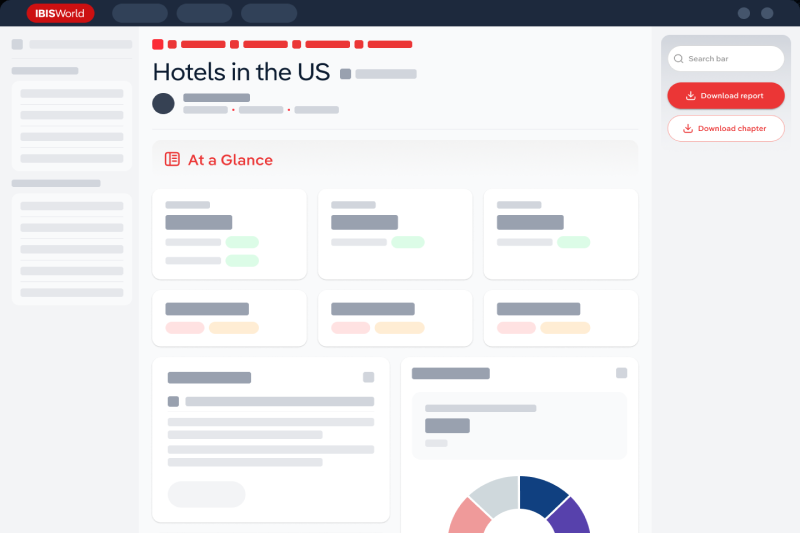
Answer any industry question in minutes with our entire database at your fingertips.
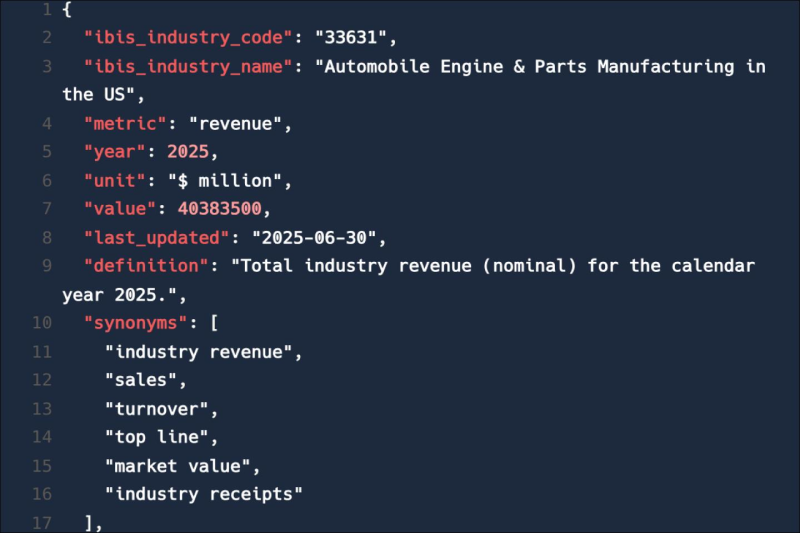
Feed trusted, human-driven industry intelligence straight into your platform.
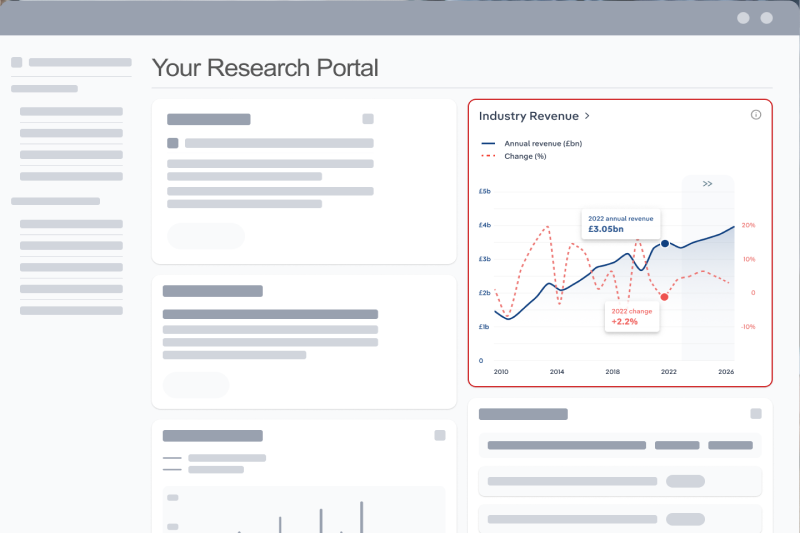
Streamline your workflow with IBISWorld’s intelligence built into your toolkit.
Explore industries with similar markets, supply chains, and economic drivers to gain broader context and insights.
| Industry | Country | Last 5-yr CAGR | Forecast 5-year CAGR | Revenue |
|---|---|---|---|---|
| Off-Licences in the UK |
|
XX% | XX% | $XX |
| Beer Production in the UK |
|
XX% | XX% | $XX |
| Craft Beer Production in the UK |
|
XX% | XX% | $XX |
| Online Alcohol Retailing in the UK |
|
XX% | XX% | $XX |
| Nightclubs in the UK |
|
XX% | XX% | $XX |
| Non-Alcoholic Beer Production in the UK |
|
XX% | XX% | $XX |
| Pubs & Bars in the UK |
|
XX% | XX% | $XX |
| Whisky Production in the UK |
|
XX% | XX% | $XX |
When the stakes are high, you need intelligence that cuts through the noise—wherever you work.
The off-trade alcohol prices in the UK in 2026 was 56.2 index points.
The off-trade alcohol prices in the UK declined by -3.16% in 2026.
IBISWorld’s data and analysis on off-trade alcohol prices in the UK includes forecasted growth rates over the next five years.