
IBISWorld Platform
Answer any industry question in minutes with our entire database at your fingertips.

There will be an estimated 1,897 million passenger rail journeys in 2026-27, representing a five-year compound annual growth rate of 13.9% from 2021-22, a year that was still impacted by COVID era lockdowns and travel restrictions. The recovery has been robust: journeys reached 1,384.8 million in 2022-23, and 1,728.7 million in 2024-25, with the latter still marginally below the pre-pandemic 2019-20 level of 1,738.7 million. Rail passengers are expected to have reached a new record in 2025-26, with Q2 2025-26 recording the highest-ever quarterly journey count at 466 million. The mainline railway network in Great Britain comprises 15,935 km of route (of which 38% is electrified) and 2,569 stations. The structural composition of the industry is undergoing a shift: under the public ownership programme launched in December 2024, multiple train operating companies, including South Western Railway, c2c, Greater Anglia, and West Midlands Trains, have been transferred into public ownership, with Govia Thameslink Railways to follow in May 2026. The Railways Bill, introduced to Parliament in November 2025, will establish Great British Railways (GBR) as a single directing mind integrating track and train operations.The Elizabeth line, which opened in May 2022, has been a significant structural contributor to growth, adding a 10% rail capacity increase in central London and generating up to 4.7 million journeys per week, making it the UK's busiest railway. More than 300 million journeys were made on the line in its first two operating years alone.Key demand drivers remain consistent: commuter activity (with nearly two-thirds of all rail journeys starting or ending in London), ticket affordability relative to alternative modes, service reliability, and hybrid working patterns. Working from home, which doubled from 4.7 million to 9.9 million workers between 2019 and 2022, remains a structural headwind on commuter volumes, moderating the pace of recovery relative to pre-pandemic trends.
Curious about what drives these trends? IBISWorld's analyst coverage on the passenger rail journeys includes detailled analysis on the current performance, outlook and industries affected.
2000-2033
This report records and analyses the volume of passenger mainline rail network journeys in Great Britain. The data, which represents the total number of journeys made on franchised rail services and non-franchised rail services, is sourced from the Office of Road and Rail (ORR) and recorded over each fiscal year (i.e., April through March). Forecast data is estimated by IBISWorld.
IBISWorld Industry Reports are available in multiple formats to fit seamlessly into your workflow.

Answer any industry question in minutes with our entire database at your fingertips.
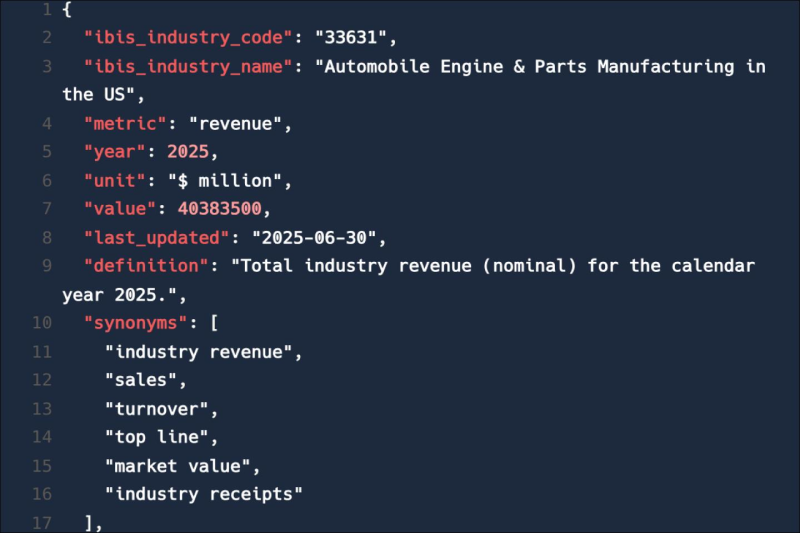
Feed trusted, human-driven industry intelligence straight into your platform.
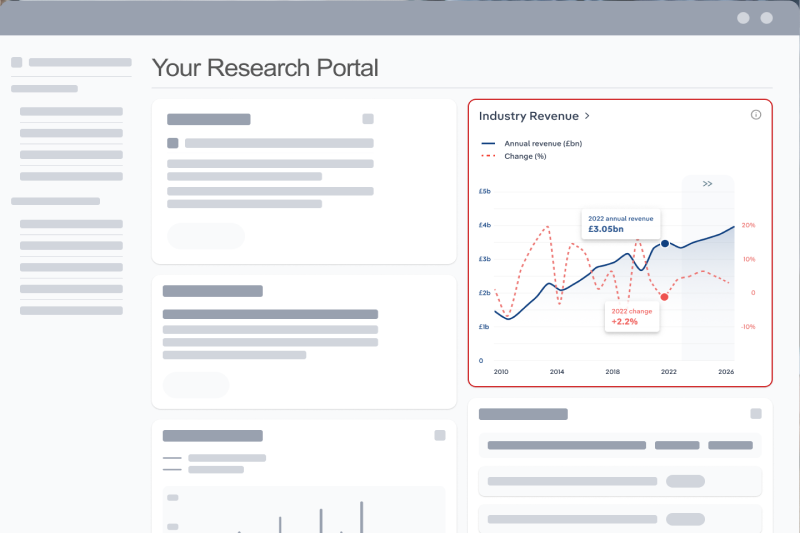
Streamline your workflow with IBISWorld’s intelligence built into your toolkit.
Explore industries with similar markets, supply chains, and economic drivers to gain broader context and insights.
| Industry | Country | Last 5-yr CAGR | Forecast 5-year CAGR | Revenue |
|---|---|---|---|---|
| Intercity Passenger Rail Transport in the UK |
|
XX% | XX% | $XX |
| Railway Equipment Manufacturing in the UK |
|
XX% | XX% | $XX |
| Petrol Stations in the UK |
|
XX% | XX% | $XX |
| Railway & Underground Railway Construction in the UK |
|
XX% | XX% | $XX |
When the stakes are high, you need intelligence that cuts through the noise—wherever you work.
The passenger rail journeys in the UK in 2027 was 1,897 million.
The passenger rail journeys in the UK grew by 13.89% in 2027.
IBISWorld’s data and analysis on passenger rail journeys in the UK includes forecasted growth rates over the next five years.