
IBISWorld Platform
Answer any industry question in minutes with our entire database at your fingertips.

Pre-pandemic, real GDP growth was modest relative to historical standards, decelerating on an annual basis for five consecutive years through 2019-20. The domestic economic backdrop was subjected to the UK's prolonged withdrawal from the European Union which, in turn, exerted a drag on market prospects through the agency of: a downturn in both business confidence and investment; investors marking down UK assets; and depleted foreign direct investment, among other economic and socio-economic ambiguities. Subsequent to ratification of the European Union (Withdrawal Agreement) Act 2020, the United Kingdom officially left the EU bloc on 31 January 2020. The transition period which was implemented – during which there was no material change to the UK's relations with the European Union - subsequently ended on 31 December 2020, and the rules governing the new relationship between the UK market and the EU bloc took effect on 1 January 2021, as per the EU-UK Trade and Cooperation Agreement.In early-2020, UK GDP growth expectations were downgraded due to an economic shock caused by the COVID-19 (coronavirus) pandemic. Sending ripples through the global economy, the pandemic resulted in severe supply chain disturbance, leading to stock market downturn, current market sell-offs, and social disruption – these factors were impetuses to an economic shock and lacklustre growth prospects in most sectors of the UK economy. In 2019-20, UK GDP growth slowed to just 0.6% in real terms, with coronavirus-induced market disruption weighing on UK output towards the tail-end of the fiscal year. Outside of the financial crisis era, when real UK GDP declined for two consecutive years – 2008-09 (-2.2%) through 2009-10 (-2.7%) – 2019-20 marked the weakest full-financial year of positive growth outturn since the turn of the millennium.With no sector left unscathed by lockdown measures and plummeting demand during the pandemic, real GDP declined by 10% in 2020-21 alone, the steepest drop since consistent records began in 1955-56 and parallel with the decline in the early-1920s (i.e., during the post-war deflationary recession) on unofficial estimates, according to a House of Commons 'Coronavirus: Economic Impact' briefing published in December 2021. During the initial lockdown and temporary hiatus in much market activity in consequence, UK economic output tumbled, declining by 19.4% on a quarterly basis in Q2 2020, subsequent to a 2.5% drop in Q1 2020 – the latter was the first quarterly decline in real UK GDP since Q4 2012 (-0.2%). UK market activity did pick up over the Spring and Summer of 2020 – real GDP grew by 17.6% in Q3 2020 - reflecting the tentative reopening of the economy; however, a second wave of Covid-19 cases and further lockdown measures implemented or otherwise reimposed to control the spread of the pandemic during the Autumn and Winter months, led to a deceleration and eventual dip in economic activity, whereby real GDP slowed to 1.5% in Q4 2020, before declining by 1.2% in Q1 2021.The Q1 2021 decline, however, was far less severe than that recorded at the onset of the pandemic, as consumers and businesses had adapted to 'new norms', so as to drive a recovery in output levels. With the government's roadmap out of lockdown in motion and progressing with the gradual easing of restrictions, real GDP rebounded again in Q2 2021 (+5.6%) and remained on an upwards trajectory in Q3 2021 (+0.9%) through Q4 2021 (+1.3%); however, on a quarterly basis, real UK GDP in Q4 2021 remained 0.1% below its level in Q4 2019, the last quarter of 'normal' trading conditions pre-coronavirus. Heading into Q1 2022, yet another surge in Covid-19 cases, led by the spread of the Omicron variant, forced the UK government and the devolved administrations to reintroduce certain restrictions to limit transmission. While official UK GDP data is yet to be published for Q1 2022 at the time of publication (19 April 2022), early evidences suggests, as per the aforementioned House of Commons briefing, 'negative economic effects [of Omicron] are already being felt', including a decline in retail footfall, cancellations in the hospitality sector and a steep drop in household spending. Further to this, the Bank of England (BoE) also reduced expectations for GDP outturn, with private-sector growth envisaged to be subdued for at least the short term and as it moved to hike intertest rates in the wake of mounting inflationary pressures – the base interest rate stood at 0.75% as of 16 March 2022, with CPI inflation hitting 7% in March 2022, the latter representing a 30-year high. While real GDP is estimated to have expanded in Q1 2022 (+0.2%), growth is expected to have been far below pre-Omicron expectations. Overall, real GDP is estimated to have recovered by 11% in 2021-22; albeit, market volatility during the year is estimated to have kept the value of real GDP in 2021-22 (£2,240.8 billion) 0.1% below its value in 2019-20 (£2,244.1 billion).During 2022-23, real UK GDP is expected to surpass its pre-pandemic level and is forecast to expand by 2.1% year-on-year to reach £2,287.9 billion. On 21 February 2022, the UK government announced its 'living with COVID' plan, which effectively removed all remaining domestic restrictions, the hope being that market output will remain on an upwards trajectory post-pandemic. However, two years since the onset of the pandemic and in the midst of another unfolding global shock, the domestic economy faces further short-term uncertainty and potential shortfalls. The Russia-Ukraine conflict has major repercussions for the global economy, whose recovery from the worst of the pandemic was already being buffeted by Omicron, supply bottlenecks and rising inflation; according to the OBR, a fortnight into the invasion, gas and oil prices peaked over 200% and 50% above their end-2021 levels respectively, and while prices have since 'moderated', they remain far above historical averages. As a net importer with a high degree of dependence on gas and oil to meet its energy needs, higher global prices have and will continue to weigh heavily on a UK economy which had just recovered its pre-pandemic output level. Petrol prices have risen exponentially and household energy bills rose 54% on average in April 2022, as per a rise in the energy price cap, whereby higher inflation has eroded real incomes; in turn, lower consumption, as expected in the wake of record inflation, interest rate hikes and net tax rises in April 2022, will likely limit real GDP growth in the current year. Despite economic headwinds, however, the OBR states 'public finances have continued to recover from the pandemic more quickly than expected. Tax receipts this year have been revised up…' and suggested 'near-term rebates and tax cuts…offset half the blow to household finances from higher energy and fuel bills and a third of the overall fall in living standards that households would otherwise have faced'.
Curious about what drives these trends? IBISWorld's analyst coverage on the real gdp includes detailled analysis on the current performance, outlook and industries affected.
2002-2031
This report analyses the real growth rate of the United Kingdom's gross domestic product (GDP). GDP measures the total output of the economy and can be measured by collecting data on production across all sectors of the economy. The data is sourced from the Office for National Statistics (ONS), in addition to estimates by IBISWorld and with reference to Office for Budget Responsibility (OBR) forecasts, as per its 'Economic and fiscal outlook – March 2022' publication. In this report, data is seasonally adjusted and deflated using chained volume measures. Annual figures in this report refer to UK fiscal years (i.e., April-March).
IBISWorld Industry Reports are available in multiple formats to fit seamlessly into your workflow.

Answer any industry question in minutes with our entire database at your fingertips.
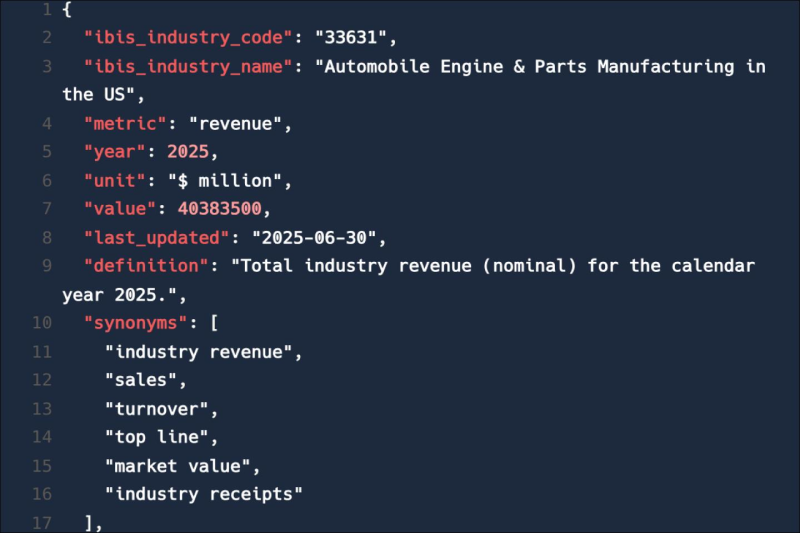
Feed trusted, human-driven industry intelligence straight into your platform.
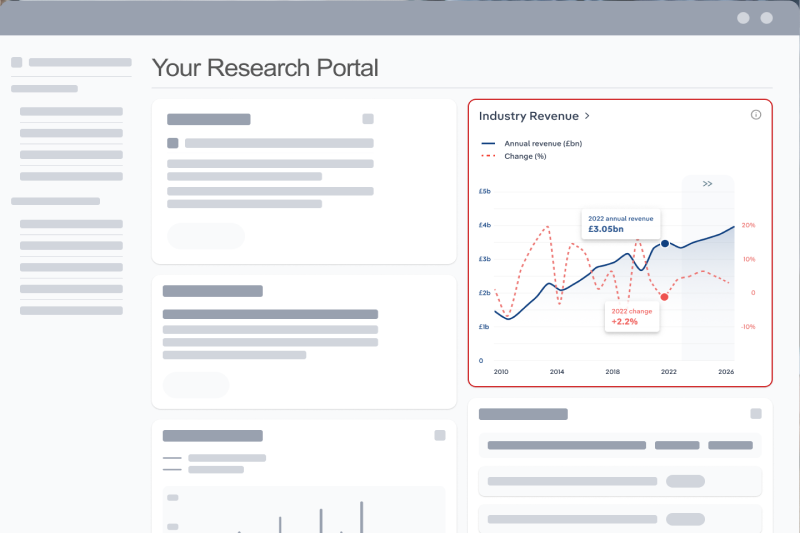
Streamline your workflow with IBISWorld’s intelligence built into your toolkit.
Explore industries with similar markets, supply chains, and economic drivers to gain broader context and insights.
When the stakes are high, you need intelligence that cuts through the noise—wherever you work.
The real gdp in the UK in 2026 was 2,594.1 £ billion.
The real gdp in the UK grew by 3.55% in 2026.
IBISWorld’s data and analysis on real gdp in the UK includes forecasted growth rates over the next five years.