
IBISWorld Platform
Answer any industry question in minutes with our entire database at your fingertips.

Recycling behaviour is shaped by individual habits, the quality of local authority collection services, the cost of Landfill Tax, and broader economic conditions affecting consumption. The UK recycling rate for waste from households reached 42.3% in 2023-4, up from 41.7% in 2022-23, though below the peak of 43.8% in 2019-20. Waste not recycled is sent to landfill, used for energy recovery or disposed of through incineration.Over the five years through 2026-27, the total volume of non-recycled household waste is expected to decline at a compound annual rate of 0.6%, reaching 13,167.7 thousand tonnes. This modest reduction reflects a broadly plateauing recycling rate rather than a structural improvement in waste reduction. Total household waste in England increased to 22.7 million tonnes in 2023-24, up 2.4% year-on-year, with residual waste rising to 13 million tonnes. Meanwhile, WRAP's Spring 2025 Recycling Tracker found that 81% of UK citizens are placing non-recyclable items in recycling bins, and social norms around recycling have weakened compared to 2019, pointing to persistent behavioural challenges.The Landfill Tax has been a consistent structural driver, with the standard rate rising sharply from £103.70 per tonne in 2024-25 to £126.15 per tonne in 2025-26. The introduction of Extended Producer Responsibility (EPR) for packaging from October 2025, which places the full net costs of household packaging waste collection and recycling on producers, represents a significant new policy lever designed to accelerate recyclability improvements upstream.
Curious about what drives these trends? IBISWorld's analyst coverage on the total non-recycled household waste includes detailled analysis on the current performance, outlook and industries affected.
2001-2033
This report analyses total household residual waste in England. The data is sourced from the Department for Environment, Food & Rural Affairs (Defra) in addition to estimates by IBISWorld. The figures represent totals for each financial year in thousands of tonnes of waste. Prior to 2010-11 the data refers to Defra's measure of total household waste in England, excluding material collected for recycling. As a result of this change, figures prior to 2010-11 are not directly comparable with latest figures.
IBISWorld Industry Reports are available in multiple formats to fit seamlessly into your workflow.

Answer any industry question in minutes with our entire database at your fingertips.
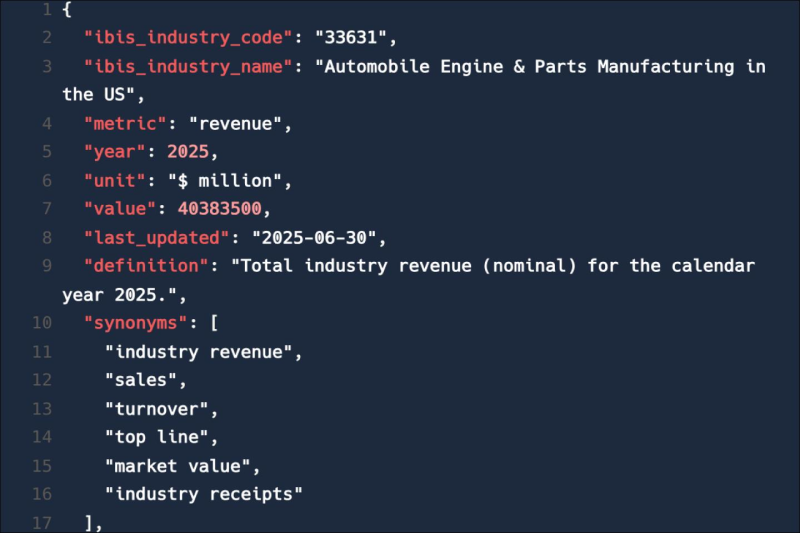
Feed trusted, human-driven industry intelligence straight into your platform.
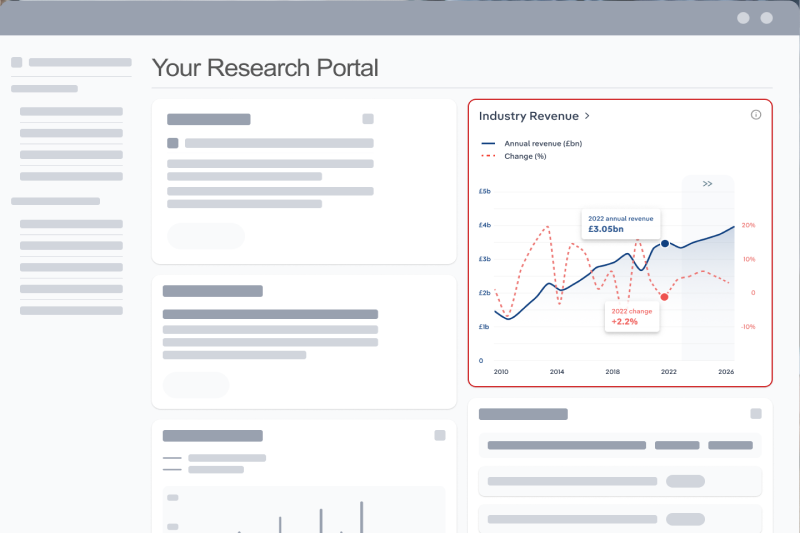
Streamline your workflow with IBISWorld’s intelligence built into your toolkit.
Explore industries with similar markets, supply chains, and economic drivers to gain broader context and insights.
| Industry | Country | Last 5-yr CAGR | Forecast 5-year CAGR | Revenue |
|---|---|---|---|---|
| Non-Hazardous Waste Treatment & Disposal in the UK |
|
XX% | XX% | $XX |
| Non-Hazardous Waste Collection in the UK |
|
XX% | XX% | $XX |
| Waste-to-Energy Plant Operation in the UK |
|
XX% | XX% | $XX |
When the stakes are high, you need intelligence that cuts through the noise—wherever you work.
The total non-recycled household waste in the UK in 2027 was 13,167.7 '000 tonnes.
The total non-recycled household waste in the UK declined by -0.64% in 2027.
IBISWorld’s data and analysis on total non-recycled household waste in the UK includes forecasted growth rates over the next five years.