
IBISWorld Platform
Answer any industry question in minutes with our entire database at your fingertips.

Over the five years through 2025-26, industry revenue is expected to grow at a compound annual rate of 1.7% to £480.6 million. Growing revenue is mainly because of a weak base year, 2020-21, during COVID-19, when the industry saw a substantial drop in revenue as purchases of fuel cards fell. Fuel prices spiked in 2022 following Russia's invasion of Ukraine, leading to rising demand for fuel cards. This led many consumers to seek discounts, benefitting the industry and propelling growth, supporting industry revenue. However, revenue took a hit in the two years through 2024-25 as fuel prices started to stabilise and business confidence recovered from cost-of-living lows following interest rate cuts and stabilising inflation. To navigate the challenges of reduced demand, providers enhanced their offerings with integrated payment solutions, subscription-based services, vehicle tracking and compliance management. By targeting smaller fleets and using digital platforms, companies like FLEETCOR aim to maintain revenue resilience by adapting to market needs and fostering customer loyalty.
Answer any industry question in minutes with our entire database at your fingertips.
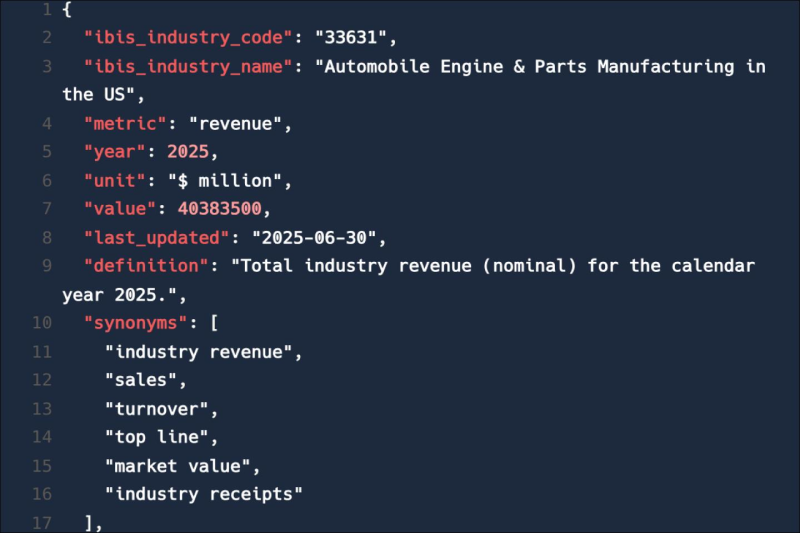
Feed trusted, human-driven industry intelligence straight into your platform.
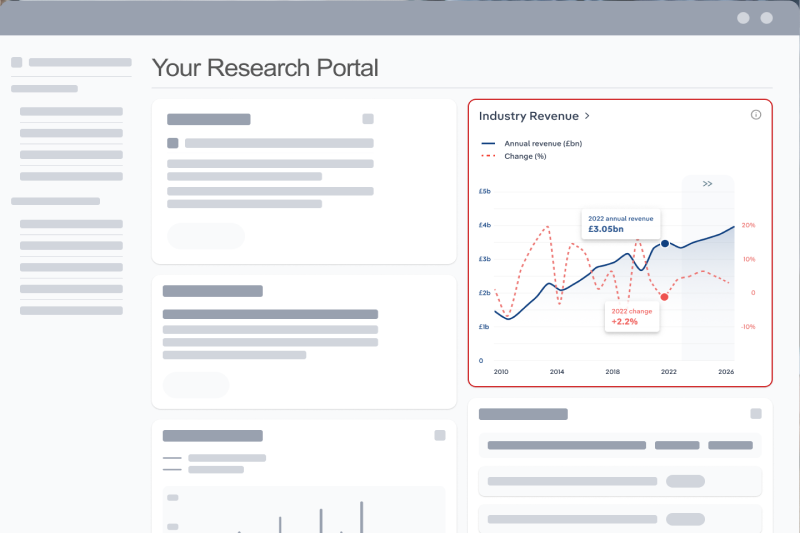
Streamline your workflow with IBISWorld’s intelligence built into your toolkit.
IBISWorld's research coverage on the Fuel Cards industry in the United Kingdom includes market sizing, forecasting, data and analysis from 2016-2031. The most recent publication was released March 2026.
The Fuel Cards industry in the United Kingdom operates under the SIC industry code SP0.051. Companies in this industry supply business customers with fuel cards. Commercial drivers use a fuel card as a payment card at a specified network of forecourts. Instead of paying with cash, credit, or debit cards, the driver presents the fuel card to the cashier. Fuel card companies bill the company directly and the employee can collect a receipt as proof of purchase. This industry excludes the sale of fuel and the provision of ancillary services, including telematics and fleet management. Related terms covered in the Fuel Cards industry in the United Kingdom include fleet management, telematics, value-added tax (vat), eurovignette and net-zero.
Products and services covered in Fuel Cards industry in the United Kingdom include Company, Bunkered and Retail.
Companies covered in the Fuel Cards industry in the United Kingdom include UK Fuels Ltd, Allstar Business Solutions Ltd and The Fuelcard Company UK Ltd.
The Performance chapter covers detailed analysis, datasets, detailed current performance, sources of volatility and an outlook with forecasts for the Fuel Cards industry in the United Kingdom.
Questions answered in this chapter include what's driving current industry performance, what influences industry volatility, how do successful businesses overcome volatility, what's driving the industry outlook. This analysis is supported with data and statistics on industry revenues, costs, profits, businesses and employees.
The Products and Markets chapter covers detailed products and service segmentation and analysis of major markets for the for the Fuel Cards industry in the United Kingdom.
Questions answered in this chapter include how are the industry's products and services performing, what are innovations in industry products and services, what products or services do successful businesses offer and what's influencing demand from the industry's markets. This includes data and statistics on industry revenues by product and service segmentation and major markets.
The Geographic Breakdown chapter covers detailed analysis and datasets on regional performance of the Fuel Cards industry in the United Kingdom.
Questions answered in this chapter include where are industry businesses located and how do businesses use location to their advantage. This includes data and statistics on industry revenues by location.
The Competitive Forces chapter covers the concentration, barriers to entry and supplier and buyer profiles in the Fuel Cards industry in the United Kingdom. This includes data and statistics on industry market share concentration, barriers to entry, substitute products and buyer & supplier power.
Questions answered in this chapter include what impacts the industry's market share concentration, how do successful businesses handle concentration, what challenges do potential industry entrants face, how can potential entrants overcome barriers to entry, what are substitutes for industry services, how do successful businesses compete with substitutes and what power do buyers and suppliers have over the industry and how do successful businesses manage buyer & supplier power.
The Companies chapter covers Key Takeaways, Market Share and Companies in the Fuel Cards industry in the United Kingdom. This includes data and analysis on companies operating in the industry that hold a market share greater than 5%.
Questions answered in this chapter include what companies have a meaningful market share and how each company is performing.
The External Environment chapter covers Key Takeaways, External Drivers, Regulation & Policy and Assistance in the Fuel Cards industry in the United Kingdom. This includes data and statistics on factors impacting industry revenue such as economic indicators, regulation, policy and assistance programs.
Questions answered in this chapter include what demographic and macroeconomic factors impact the industry, what regulations impact the industry, what assistance is available to this industry.
The Financial Benchmarks chapter covers Key Takeaways, Cost Structure, Financial Ratios, Valuation Multiples and Key Ratios in the Fuel Cards industry in the United Kingdom. This includes financial data and statistics on industry performance including key cost inputs, profitability, key financial ratios and enterprise value multiples.
Questions answered in this chapter include what trends impact industry costs and how financial ratios have changed overtime.
The Industry Data chapter includes 10 years of historical data with 5 years of forecast data covering statistics like revenue, industry value add, establishments, enterprises, employment and wages in the Fuel Cards industry in the United Kingdom.
More than 6,000 businesses use IBISWorld to shape local and global economies
We were able to supplement our reports with IBISWorld’s information from both a qualitative and quantitative standpoint. All of our reporting now features some level of IBISWorld integration.

IBISWorld delivers the crisp business knowledge we need to drive our business. Whether it be serving up our major clients, winning new business or educating on industry issues, IBISWorld brings real value.

IBISWorld has revolutionised business information — which has proved commercially invaluable to exporters, investors and public policy professionals in Australia and overseas.

When you’re able to speak to clients and be knowledgeable about what they do and the state that they operate in, they’re going to trust you a lot more.

The market size of the Fuel Cards industry in the United Kingdom is £480.6m in 2026.
There are 44 businesses in the Fuel Cards industry in the United Kingdom, which has declined at a CAGR of 0.9 % between 2021 and 2026.
The Fuel Cards industry in the United Kingdom is unlikely to be materially impacted by import tariffs with imports accounting for a low share of industry revenue.
The Fuel Cards industry in the United Kingdom is unlikely to be materially impacted by export tariffs with exports accounting for a low share of industry revenue.
The market size of the Fuel Cards industry in the United Kingdom has been growing at a CAGR of 1.7 % between 2021 and 2026.
Over the next five years, the Fuel Cards industry in the United Kingdom is expected to grow.
The biggest companies operating in the Fuel Cards industry in the United Kingdom are UK Fuels Ltd, Allstar Business Solutions Ltd and The Fuelcard Company UK Ltd
Company fuel cards and Bunkered fuel cards are part of the Fuel Cards industry in the United Kingdom.
The company holding the most market share in the Fuel Cards industry in the United Kingdom is UK Fuels Ltd.
The level of competition is high and steady in the Fuel Cards industry in the United Kingdom.