
IBISWorld Platform
Answer any industry question in minutes with our entire database at your fingertips.

Aggregate private investment is estimated to reach $4,591.1 trillion in 2026, with a growth of 3.1% for the year. This growth is sustained by ongoing interest rate cuts initiated by the Federal Reserve in 2024. However, positive momentum is counterbalanced by heightened inflationary pressures due to new tariffs on goods from Mexico, Canada and especially China. These tariffs, imposed by the Trump Administration, have increased production costs, discouraging discretionary and expansionary investments. Businesses and consumers are responding to ongoing price uncertainty and global economic volatility with caution, keeping the growth rate of aggregate private investment moderate.Over the five years leading to 2026, aggregate private investment has shown notable volatility and resilience. In 2021, a robust economic rebound and low mortgage rates spurred significant growth in residential construction, supporting an 9.0% annual increase. Investment continued to grow in 2022 by 6.1%, even amidst inflation levels not seen since the early 1980s. The Federal Reserve responded with several interest rate hikes as geopolitical instability increased energy prices. Despite challenges, confidence in the underlying economy sustained private investment growth. Persistent high interest rates in 2023 tempered further growth, with a marginal increase of 0.8% in aggregate private investment as tighter monetary policy took effect. The Federal Reserve's interest rate cuts in 2024 provided some relief, but benefits have been gradual.Macroeconomic headwinds like rapidly changing monetary policies, supply chain volatility, and shifting corporate confidence have dominated the investment environment throughout this period. Business investment, comprising 60.0% to 80.0% of aggregate private investment, has been highly sensitive to borrowing costs and long-term policy risks. Large swings in energy prices and global commodity markets have influenced nonresidential investment, while the residential segment expanded during low interest rates but plateaued as borrowing became costlier.Overall, aggregate private investment displayed moderate growth from 2021 to 2026, increasing at an average annual rate of 3.1%. The performance reflects the interplay between monetary tightening, shifting global conditions, and periodic regulatory interventions.
Curious about what drives these trends? IBISWorld's analyst coverage on the aggregate private investment includes detailled analysis on the current performance, outlook and industries affected.
1980-2032
Aggregate private investment, or private fixed investment, includes spending by individuals and businesses on physical structures, equipment and software. It is different from gross domestic investment because it does not include investment by the government. Aggregate private investment is typically broken down into residential and nonresidential components, which in turn are comprised of physical structures, equipment and software, as well as changes in inventory levels. Intermediate inputs, which become part of the final product, are not included in investment. The data for this report is sourced from the Bureau of Economic Analysis and presented in chained 2017 dollars.
IBISWorld Industry Reports are available in multiple formats to fit seamlessly into your workflow.

Answer any industry question in minutes with our entire database at your fingertips.
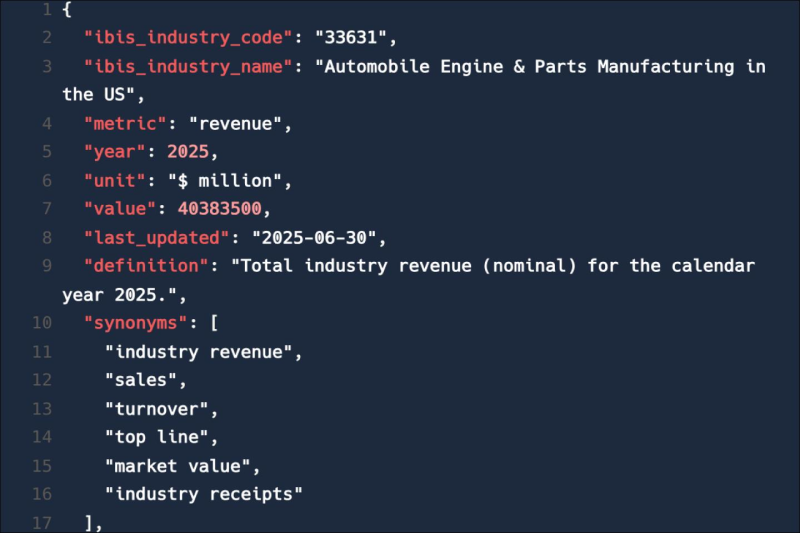
Feed trusted, human-driven industry intelligence straight into your platform.
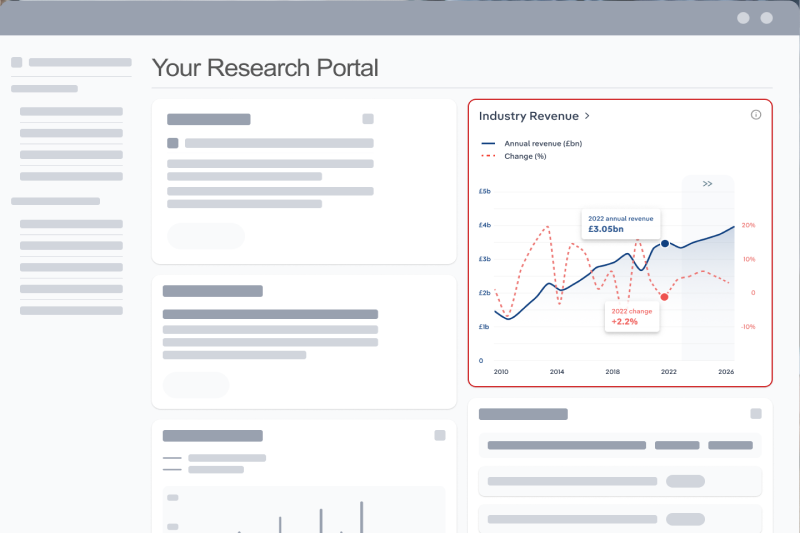
Streamline your workflow with IBISWorld’s intelligence built into your toolkit.
Explore industries with similar markets, supply chains, and economic drivers to gain broader context and insights.
When the stakes are high, you need intelligence that cuts through the noise—wherever you work.
The aggregate private investment in the US in 2026 was $4,591.08 billion.
The aggregate private investment in the US grew by 3.08% in 2026.
IBISWorld’s data and analysis on aggregate private investment in the US includes forecasted growth rates over the next five years.