
IBISWorld Platform
Answer any industry question in minutes with our entire database at your fingertips.

In 2026, the number of immigrants entering the United States is estimated to fall 20.9%, reflecting a sharp slowdown tied to recent enforcement and adjudication decisions. Authorities have moved to restrict who can enter or secure legal status, tightening both front-end admissions and back-end processing. USCIS has begun directing officers to rerun pending green card and naturalization applications through additional FBI background checks, which lengthens processing times and reduces the number of cases that reach approval in a given year. At the same time, changes to the N-400 civics exam have expanded the range and difficulty of questions, raising the bar for applicants seeking citizenship and making legal status harder to obtain than under prior rules. Further constraints stem from security-driven pauses and enforcement initiatives, including holds on applications from designated higher-risk countries and targeted denaturalization actions that could lower the stock of naturalized citizens if fully upheld in court, collectively contributing to the projected 20.9% decline in immigrant inflows.Over the five years to 2026, immigration to the United States has fluctuated significantly in response to public health, economic, and policy changes. Following the easing of restrictions and a change in administration, the reopening of borders and the rollout of vaccines triggered a significant rebound, with immigration rising 37.6% in 2022 and another 15.2% in 2023. The processing of backlogged applications further contributed to sharp growth during this period. Also, ongoing improvements in economic conditions in the United States made the country a more attractive destination for job seekers.Broader macroeconomic and geopolitical trends have also shaped recent immigration patterns. Recovery in the domestic economy following pandemic-induced contraction restored incentives for migration, while global instability, such as conflicts and economic challenges around the world, served to both push migrants toward the United States and complicate regulatory responses. The interplay between U.S. administrative changes and global events heightened the volatility of immigrant numbers during the period. By 2025, stricter federal immigration policies sharply curtail new arrivals, as increased scrutiny and requirements offset positive macroeconomic trends, culminating in a more constrained immigration environment. Over the five years to 2026, the net effect has been a 1.4% increase in the number of immigrants, though underlying volatility has created an unpredictable business landscape for industries reliant on population growth through migration.
Curious about what drives these trends? IBISWorld's analyst coverage on the number of immigrants includes detailled analysis on the current performance, outlook and industries affected.
1980-2032
The number of immigrants represents the number of people who obtain legal permanent resident status in a given year. Data is sourced from the Department of Homeland Security and forecast with projections from the US Census Bureau.
IBISWorld Industry Reports are available in multiple formats to fit seamlessly into your workflow.

Answer any industry question in minutes with our entire database at your fingertips.
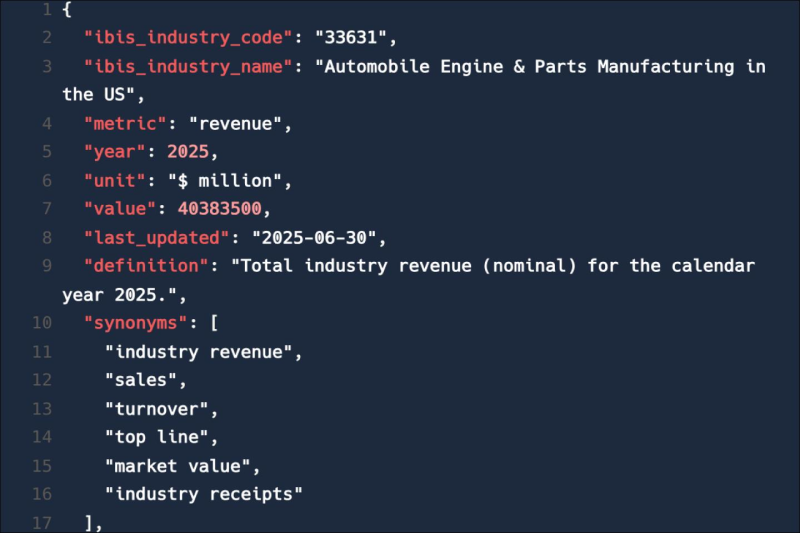
Feed trusted, human-driven industry intelligence straight into your platform.

Streamline your workflow with IBISWorld’s intelligence built into your toolkit.
Explore industries with similar markets, supply chains, and economic drivers to gain broader context and insights.
| Industry | Country | Last 5-yr CAGR | Forecast 5-year CAGR | Revenue |
|---|---|---|---|---|
| Immigration Lawyers & Attorneys in the US |
|
XX% | XX% | $XX |
| Ethnic Supermarkets in the US |
|
XX% | XX% | $XX |
| Language Instruction in the US |
|
XX% | XX% | $XX |
| Translation Services in the US |
|
XX% | XX% | $XX |
| Mexican Restaurants in the US |
|
XX% | XX% | $XX |
| Language Learning Software Developers in the US |
|
XX% | XX% | $XX |
| Tortilla Manufacturing in the US |
|
XX% | XX% | $XX |
| Hot Sauce Production in the US |
|
XX% | XX% | $XX |
| Religious Organizations in the US |
|
XX% | XX% | $XX |
When the stakes are high, you need intelligence that cuts through the noise—wherever you work.
The number of immigrants in the US in 2026 was 0.8 million people.
The number of immigrants in the US grew by 1.45% in 2026.
IBISWorld’s data and analysis on number of immigrants in the US includes forecasted growth rates over the next five years.