
IBISWorld Platform
Answer any industry question in minutes with our entire database at your fingertips.

Private investment in industrial equipment and machinery is expected to reach $841.5 billion in 2026, a 3.1% increase from the previous year. The main focus will be on upgrading production capabilities, as earlier waves of semiconductor projects move deeper into construction, tooling and ramp-up, driving stronger demand for advanced manufacturing equipment. At the same time, large-scale data center development will support additional investment, because operators will require substantial power infrastructure, including nearby generation assets, turbines and backup generators, to meet rising electricity needs. These projects will translate into higher procurement of industrial machinery and related components throughout the year. Investment will also be supported by more favorable tax treatment. The introduction of bonus depreciation under the OBBBA will allow qualifying companies to fully expense eligible equipment placed in service more quickly, improving after-tax returns on capital outlays. This incentive is expected to encourage firms to bring forward or scale up purchases of industrial equipment and machinery in 2026 to lock in the associated tax benefits.Between 2021 and 2026, private investment in industrial equipment grew at an annualized rate of 3.0%, rebounding from a contraction in 2020. The pandemic's impact in early 2021 prompted industry focus on resilient and adaptive production technologies, accelerating digitalization and automation trends. Manufacturing companies allocated significant capital toward equipment capable of streamlining operations, compensating for labor shortages, and enhancing overall productivity. Investments reflected the broad uptake of smart factory technologies designed to drive operational efficiency. Sustainability emerged as a key strategic priority in this period, with organizations directing spending to energy-efficient and environmentally friendly machinery supporting regulatory compliance and corporate social responsibility objectives. The uncertain macroeconomic backdrop posed by inflation and rising interest rates tempered the pace of expansion at times; however, equipment investment remained robust, bolstered by the ongoing need to adopt competitive technologies and mitigate supply chain vulnerabilities. The rise of flexible financing and acquisition models further underpinned continued capital outlays as businesses sought alternatives to large upfront expenditures.Throughout this period, macroeconomic variables including inflation, interest rates, and ongoing adjustments in global supply chains have played a central role in shaping investment decisions. Companies responded to these conditions by prioritizing projects that would yield productivity gains or cost savings. Structural labor shortages, particularly apparent in logistics and manufacturing, encouraged capital deepening and accelerated the deployment of labor-saving automation. Efforts to enhance domestic production capacity in response to global disruptions also spurred demand for advanced machinery. By 2025, ongoing shifts in production strategies, heightened digitalization, and investment in sustainability have continued to drive capital flows into the industrial equipment sector, supporting its fundamental role in underpinning productivity and manufacturing competitiveness.
Curious about what drives these trends? IBISWorld's analyst coverage on the private investment in industrial equipment and machinery includes detailled analysis on the current performance, outlook and industries affected.
1980-2032
Private investment in industrial equipment and machinery represents the total annual expenditure by businesses on industrial equipment, transportation equipment and all other equipment not classified as computers and software, including furniture, mining equipment and agricultural equipment. Data is adjusted for inflation with 2017 as the base year and is sourced from the US Bureau of Economic Analysis.
IBISWorld Industry Reports are available in multiple formats to fit seamlessly into your workflow.

Answer any industry question in minutes with our entire database at your fingertips.
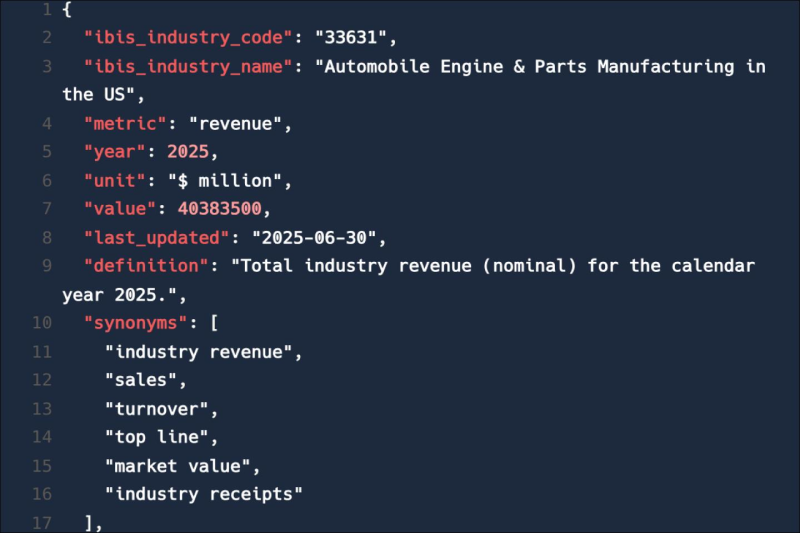
Feed trusted, human-driven industry intelligence straight into your platform.
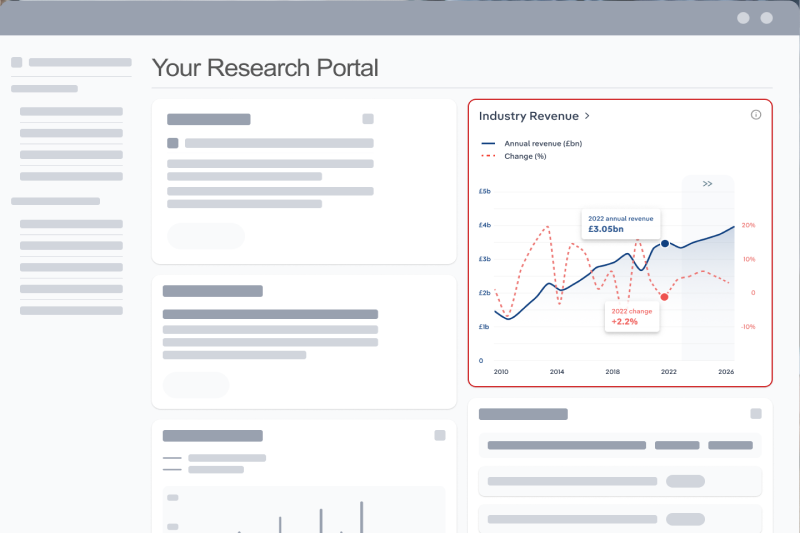
Streamline your workflow with IBISWorld’s intelligence built into your toolkit.
Explore industries with similar markets, supply chains, and economic drivers to gain broader context and insights.
When the stakes are high, you need intelligence that cuts through the noise—wherever you work.
The private investment in industrial equipment and machinery in the US in 2026 was $841.51 billion.
The private investment in industrial equipment and machinery in the US grew by 3.06% in 2026.
IBISWorld’s data and analysis on private investment in industrial equipment and machinery in the US includes forecasted growth rates over the next five years.