
IBISWorld Platform
Answer any industry question in minutes with our entire database at your fingertips.

Coarse grain prices are regaining upward momentum in 2026, climbing by 1.7%, as the market navigates a new round of cost and supply pressures. Firmer oat and sorghum prices are driving the rise as producers grapple with sharply higher fuel and fertilizer costs that lift breakeven levels across the supply chain. These pressures are closely tied to renewed spikes in global energy benchmarks and fertilizer prices linked to conflicts in the Middle East and the ongoing fallout from Russia's invasion of Ukraine, which have raised freight and input costs for grain growers worldwide. Higher production costs are feeding through to offer prices, ensuring that even modest demand growth translates into noticeable gains in the coarse grain index. Between 2021 and 2026, the coarse grain market experienced considerable volatility, falling at an overall CAGR of 7.7%. Prices skyrocketed in 2021 as economies reopened and pandemic-era logistics bottlenecks collided with recovering demand, then surged again in 2022 when the Ukraine war disrupted Black Sea exports and sent global grain benchmarks to multi-year highs. The index began to retreat in 2023 as alternative exporters stepped up, trade routes adjusted and global food commodity prices broadly slid back toward pre-shock levels. Through 2024 and 2025, improving harvests and softer demand growth kept prices on a downward path, but the correction remained incomplete as lingering geopolitical tensions, elevated energy costs and recurrent weather shocks prevented a full reversion to the pre-pandemic price environment.Weather and climate risks have been a defining feature of the period, keeping markets on edge and reinforcing the latest price upturn. More frequent droughts and heatwaves in key producing regions are eroding yield potentials for barley, oats and sorghum, limiting the degree to which larger planted areas can translate into looser supplies. These shocks magnify the impact of already elevated input costs, as farmers facing stressed fields require more fertilizer, water and energy to sustain output, yet still risk smaller harvests. The result is a market that reacts quickly to adverse forecasts, with price spikes emerging whenever seasonal outlooks turn drier or hotter than expected.Prices are also responding to shifting trade patterns and intensifying competition among major exporters. Expanded production capacity in regions such as the European Union and Russia has enabled buyers to diversify away from US-origin barley and other coarse grains, especially amid geopolitical tensions and tariffs that have complicated trade flows. Ukraine, despite war-related disruptions, has also managed to restore and even expand corn shipments into some markets, changing the export mix and capping US pricing power. These dynamics have reduced the automatic premium once associated with US supplies and contributed to sharper price swings as importers switch between origins based on cost, logistics and political risk.
Curious about what drives these trends? IBISWorld's analyst coverage on the producer price index: coarse grains includes detailled analysis on the current performance, outlook and industries affected.
1980-2032
The price of coarse grains tracks the prices of barley, oats and sorghum. Other varieties of coarse grains, such as rye and rough rice, are excluded from the report, as they only account for about 2% of production. Producer price indexes for these three grains are combined using a weighted average based on yearly disappearance levels. Annual figures presented in this report are the equally weighted averages of monthly means. Data is in real terms with a base of 1982 and sourced from the Bureau of Labor Statistics.
IBISWorld Industry Reports are available in multiple formats to fit seamlessly into your workflow.

Answer any industry question in minutes with our entire database at your fingertips.
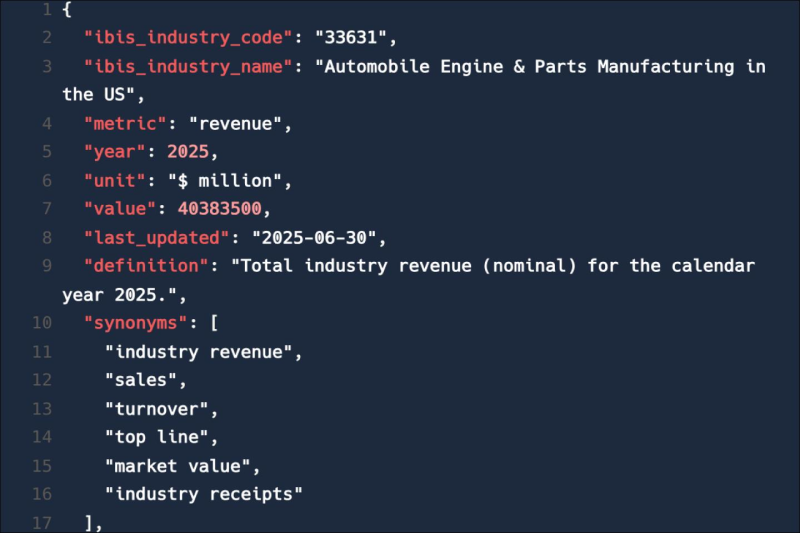
Feed trusted, human-driven industry intelligence straight into your platform.

Streamline your workflow with IBISWorld’s intelligence built into your toolkit.
Explore industries with similar markets, supply chains, and economic drivers to gain broader context and insights.
| Industry | Country | Last 5-yr CAGR | Forecast 5-year CAGR | Revenue |
|---|---|---|---|---|
| Cereal Manufacturing in the US |
|
XX% | XX% | $XX |
When the stakes are high, you need intelligence that cuts through the noise—wherever you work.
The producer price index for coarse grains in the US in 2026 was 183.1 index points.
The producer price index for coarse grains in the US declined by -7.86% in 2026.
IBISWorld’s data and analysis on producer price index for coarse grains in the US includes forecasted growth rates over the next five years.