
IBISWorld Platform
Answer any industry question in minutes with our entire database at your fingertips.

The value of nonresidential construction is set to fall -0.8% in 2026 to reach $652.04 billion. Between 2021 and 2026, the private non-residential construction sector in the United States rebounded from pandemic-era disruptions and tracked a moderate upward trend. Activity contracted by 2.7% to $568.60 billion in 2021, largely reflecting the lingering effects of shutdowns, reduced business confidence, and hesitance around major capital projects as uncertainty remained high. However, the sector quickly regained momentum in 2022, growing by 3.4% to $588.20 billion as businesses adapted to new conditions, remote work fueled the development of distribution and warehousing, and consumer-facing industries resumed expansion.The most dramatic shift emerged in 2023, with a substantial 16.7% jump to $686.40 billion. This surge was driven primarily by pent-up demand, a recovery in retail and entertainment construction, and robust investment in life sciences, data centers and logistics infrastructure. Commercial real estate received a boost as the economy rebounded, companies pursued new business models, and capital availability increased through both private and public sector support. Public incentives for reshoring manufacturing and tech sector expansion also contributed to increased construction activity during this time.Growth continued into 2024, albeit at a slower pace, with value rising by just 1.1% to $694.00 billion as the post-pandemic boom tapered off and interest rates began to climb. In 2025, activity declined by -5.3% to $657.30 billion, influenced by tighter financial conditions, high construction costs, and a more cautious approach from businesses facing economic headwinds. Over the entire period from 2021 to 2026, private non-residential construction increased at a compound annual growth rate of 2.8%. The trajectory reflects a sector still recovering from major shocks but resilient in adapting to technological change and shifting business needs.
Curious about what drives these trends? IBISWorld's analyst coverage on the value of private nonresidential construction includes detailled analysis on the current performance, outlook and industries affected.
1980-2032
The value of private non-residential construction measures inflation-adjusted spending on new commercial buildings, manufacturing facilities, warehouses, and other structures intended for business or institutional use. Expressed in billions of chained (2017) US dollars, this indicator reflects ongoing investment by the private sector in productive real estate, infrastructure, and expansion. Data is sourced from the Bureau of Economic Analysis.
IBISWorld Industry Reports are available in multiple formats to fit seamlessly into your workflow.

Answer any industry question in minutes with our entire database at your fingertips.
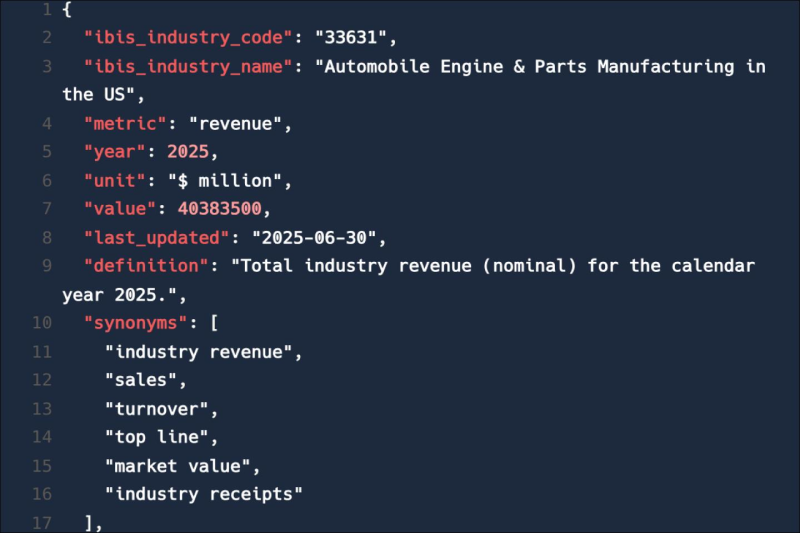
Feed trusted, human-driven industry intelligence straight into your platform.

Streamline your workflow with IBISWorld’s intelligence built into your toolkit.
Explore industries with similar markets, supply chains, and economic drivers to gain broader context and insights.
When the stakes are high, you need intelligence that cuts through the noise—wherever you work.
The value of private nonresidential construction in the US in 2026 was $652.04 billion.
The value of private nonresidential construction in the US grew by 2.78% in 2026.
IBISWorld’s data and analysis on value of private nonresidential construction in the US includes forecasted growth rates over the next five years.