Mobile Menu

Third-Party Logistics in the US - Market Research Report (2016-2031)

Seth Lee Seth Lee New York, United States Last Updated: February 2026 NAICS OD5504

Revenue

$346.2bn

2026

$346.2bn

Past 5-Year Growth

Profit

$XX.Xbn

Employees

481k

Businesses

68,728

Wages

$XX.Xbn

Third-Party Logistics in the US industry analysis

The industry has navigated a complex and costly operating environment over the past five years as freight markets corrected from pandemic-era highs. With shipping rates normalizing, intermediaries now buy carrier capacity for clients at significantly lower prices, sharply limiting their ability to mark up transportation and compressing revenue from core freight management segments. Operators have responded to this margin squeeze by unwinding a previously bloated workforce, using substantial headcount reductions alongside new investments in productivity tools and automation to reduce manual work and improve operating efficiency. These cost reforms have helped contain the damage from weaker pricing but haven’t fully offset the impact of softer transportation markets on profit.

Trends and Insights

  • Soft freight demand is squeezing profit but forcing sharper cost discipline. With shipments and line-haul rates down, leading 3PLs are leaning on headcount cuts, automation and tighter expense controls to stabilize profit in a freight recession rather than chase growth.
  • Transportation management is feeling the full force of the freight recession. With excess capacity driving down spot and contract rates, 3PLs are earning thinner spreads on moves and reporting multi-year revenue declines in transportation-heavy product lines.
  • California remains a top 3PL destination thanks to world-class ports and a strong local consumer base. However, new regulations like AB 98 will soon force companies to shift strategy and adopt cleaner technologies.
  • Entering the third-party logistics sector isn't easy. Thanks to rigorous licensing, potential new entrants face significant hurdles that act as a deterrent in this industry.
Show more

Get more expert insights that help you cut through the noise.

Get fast answers to complex questions about your business or your client’s industry. Annual memberships include unlimited access to data and analysis for thousands of industries globally.

Get in Touch

Unlock Expert Insights with Full Platform Access

  • Human Driven & Verified Analysis
  • Structured Database Powering Workflows
  • Intelligent Tools Empowering Confident Decisions
  • Insight where-and how- you need them

How you can access insights on the Third-Party Logistics in the US industry

The Third-Party Logistics in the US Industry Report is available in multiple formats to fit seamlessly into your workflow.

IBISWorld Platform

Answer any industry question in minutes with our entire database at your fingertips.

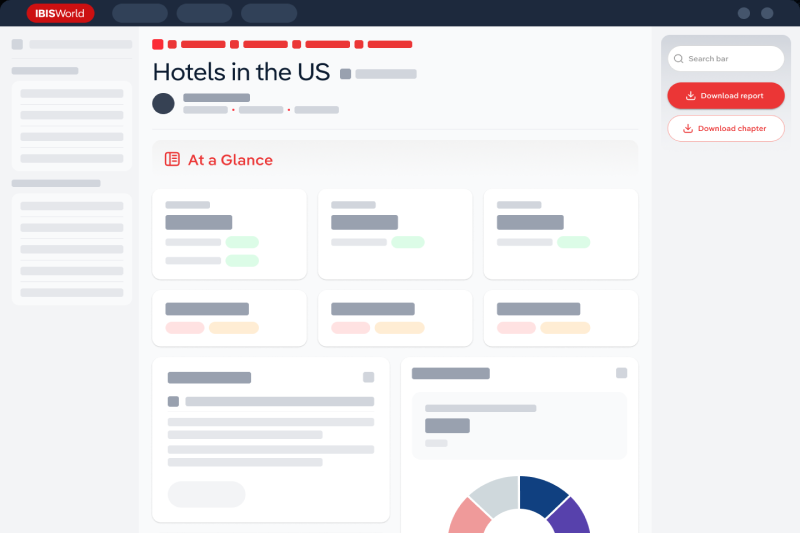
Screen of the IBISWorld platform user interface Book a demo

API Data Delivery

Feed trusted, human-driven industry intelligence straight into your platform.
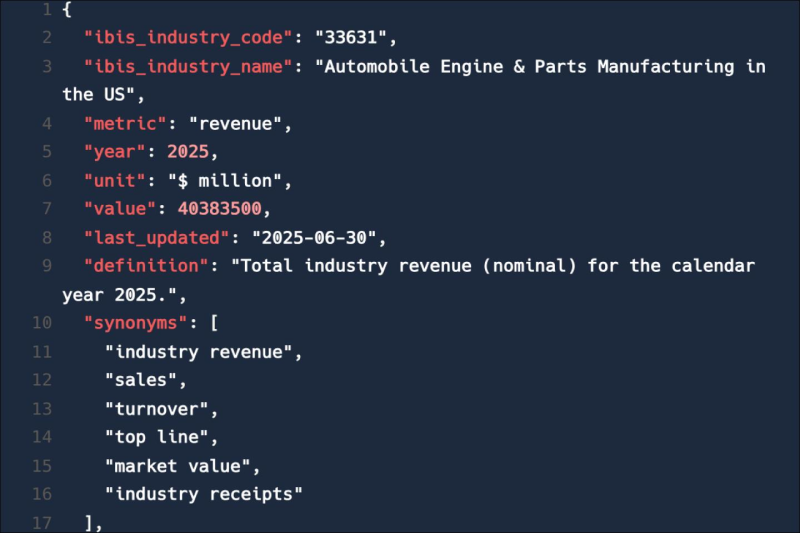
Code example of using the IBISWorld API API documentation

Integrations

Streamline your workflow with IBISWorld’s intelligence built into your toolkit.

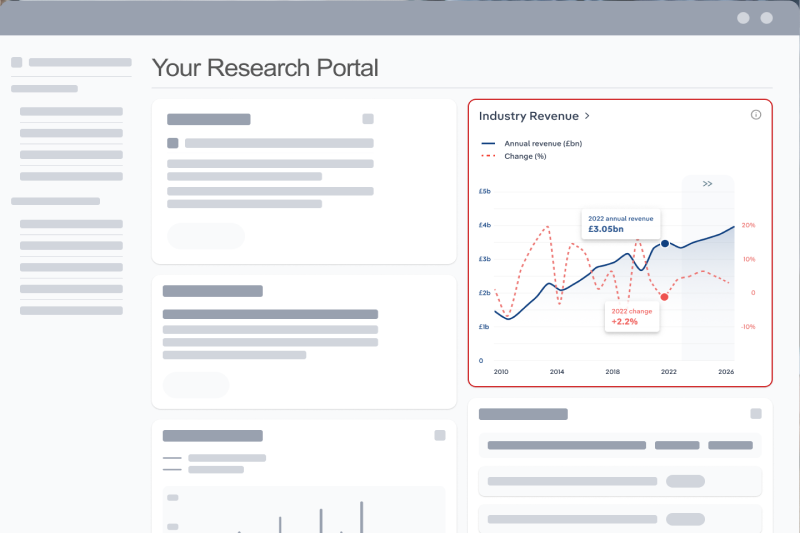
Screen of Client Application integrating with IBISWorld data View integrations

Related Coverage

Understand the landscape with full access to an IBISWorld license

Industry Statistics and Trends

Market size and recent performance (2016-2031)

Industry revenue has grown at a CAGR of 0.6 % over the past five years, to reach an estimated $346.2bn in 2026.

Trends and Insights

Freight recession and aggressive cost control reformulate the industry's costs

  • Soft demand and excess trucking capacity are squeezing 3PL revenue and profit. Transportation intermediaries typically buy available carrier capacity and resell it at spot or contract rates. Still, the ongoing freight recession, driven by moderate freight demand and increased capacity in modes such as trucking, international air and ocean, has left carriers with surplus capacity and pushed rates lower. The Transportation Intermediaries Association reported that in the fourth quarter of 2023, total shipments fell 8.9% year over year and member revenue declined 21.4%. President Anne Reinke linked the downturn to persistent carrier overcapacity despite some market exits.
  • Additional trends and insights available with purchase
Third-Party Logistics in the US
Revenue (2016-2031)
IBISWorld Logo Source: IBISWorld

Industry outlook (2026-2031)

Market size is projected to grow over the next five years.

Trends and Insights

4PL models and ecosystem integration reshape third-party logistics business structure

  • Large shippers are entering 2027 with different expectations of third-party logistics providers, as repeated disruptions refocus priorities from cost savings toward continuity and risk management across complex supply chains. A 2024 EFESO survey of supply chain organizations found a greater need for resilience measures, with nearly 75.0% of global respondents indicating that strengthening resilience and agility is a primary goal in redesigning their supply chains in the coming years, signaling a structural shift in 3PL client priorities.

Biggest companies in the Third-Party Logistics in the US

Company
Market Share (%)
2026
Revenue ($m)
2026
Profit ($m)
2026
Profit Margin (%)
2026
Amazon.Com, Inc.
85,455.1
10,029.0
11.7
C.H. Robinson Worldwide, Inc.
13,938.3
819.9
5.9
United Parcel Service, Inc.
8,203.2
734.0
8.9

To view the market share and analysis for all 3 top companies in this industry, view purchase options.

Products & Services Segmentation

Third-Party Logistics in the US
Products & Services
IBISWorld Logo Source: IBISWorld

Industry revenue is measured across several distinct product and services lines, including Transportation management , Warehousing and related services and Other services. Transportation management is the largest segment of the Third-Party Logistics in the US.

Trends and Insights

Freight recession weighs on transportation management revenue

  • Transportation management services cover planning, pricing and execution of freight moves across truckload, less-than-truckload, intermodal and parcel modes, typically through transportation management systems that optimize routing, tender loads, consolidate shipments, audit freight bills and provide supply visibility dashboards. Over time, this service line generates the largest share of 3PL revenue because shippers channel far more spending through transportation than warehousing, enabling intermediaries that manage routing and carrier networks to collect recurring management fees and profit on large freight flows.
  • More insights available in the full report

Table of Contents

About this industry

Industry definition

Third-party logistics (3PL) companies provide outsourced logistics services to clients. Operators typically provide integrated supply chain solutions that include, but are not limited to, warehousing, forwarding, packing, consulting, brokerage and transportation documentation. In particular, 3PL providers will tailor and incorporate their services into their customer’s supply chain based on the client’s needs. All revenue in this report is gross revenue.

What's included in this industry?

Products and services covered in the Third-Party Logistics industry in the United States include Logistic consulting, Transportation management, Forwarding, Packing, Freight brokerage , Warehousing and Dedicated contract carriage.

Companies

Companies covered in the Third-Party Logistics industry in the United States include Amazon.Com, Inc., C.H. Robinson Worldwide, Inc. and United Parcel Service, Inc.

Purchase this report to view all 3 major companies in this industry.

Related Terms

Related terms covered in the Third-Party Logistics industry in the United States include integrated logistic service, fulfillment and forwarding.

Industry Code

NAICS 2017

NAICS 488510 - Third-Party Logistics in the US

Performance

Get an indication of the industry's health through historical, current and forward-looking trends in the performance indicators that make or break businesses.

Analyst insights

Soft freight demand is squeezing profit but forcing sharper cost discipline. With shipments and line-haul rates down, leading 3PLs are leaning on headcount cuts, automation a...

In this chapter (4)

  • Current Performance
  • Outlook
  • Volatility
  • Life Cycle

Key metrics

  • Annual Revenue, Recent Growth, Forecast, Revenue Volatility
  • Number of Employees, Recent Growth, Forecast, Employees per Business, Revenue per Employee
  • Number of Businesses, Recent Growth, Forecast, Employees per Business, Revenue per Business
  • Total Profit, Profit Margin, Profit per Business

Charts

  • Revenue, including historical (2016-2025) and forecast (2026-2031)
  • Employees, including historical (2016-2025) and forecast (2026-2031)
  • Businesses, including historical (2016-2025) and forecast (2026-2031)
  • Profit, including historical (2016-2026)
  • Industry Volatility vs. Revenue Growth
  • Industry Life Cycle

Detailed analysis

  • Trends in supply, demand and current events that are driving current industry performance
  • Expected trends, economic factors and ongoing events that drive the industry's outlook
  • Key success factors for businesses to overcome volatility
  • How contribution to GDP, industry saturation, innovation, consolidation, and technology and systems influence the industry's life cycle phase.

Products and Markets

Learn about an industry's products and services, markets and trends in international trade.

Analyst insight

Transportation management is feeling the full force of the freight recession. With excess capacity driving down spot and contract rates, 3PLs are earning thinner spreads on m...

In this chapter

  • Products & Services
  • Major Markets

Key metrics

  • Largest market segment and value in 2026
  • Product innovation level

Charts

  • Products & services segmentation in 2026
  • Major market segmentation in 2026

Detailed analysis

  • Trends impacting the recent performance of the industry's various segments
  • Innovations in the industry's product or service offering, specialization or delivery method
  • Key factors that successful businesses consider in their offerings
  • Buying segments and key trends influencing demand for industry products and services

Geographic Breakdown

Discover where business activity is most concentrated in an industry and the factors driving these trends to find opportunities and conduct regional benchmarking.

Analyst insights

California remains a top 3PL destination thanks to world-class ports and a strong local consumer base. However, new regulations like AB 98 will soon force companies to shift ...

In this chapter (1)

  • Business Locations

Charts

  • Share of revenue, establishment, wages and employment in each state
  • Share of population compared to establishments in each region in 2026

Tables

  • Number and share of establishments in each state in 2026
  • Number and share of revenue each state accounts for in 2026
  • Number and share of wages each state accounts for in 2026
  • Number and share of employees in each state in 2026

Detailed analysis

  • Geographic spread of the industry across North America, and trends associated with changes in the business landscape
  • Key success factors for businesses to use location to their advantage

Competitive Forces

Get data and insights on what's driving competition in an industry and the challenges industry operators and new entrants may face, with analysis built around Porter's Five Forces framework.

Analyst insights

Entering the third-party logistics sector isn't easy. Thanks to rigorous licensing, potential new entrants face significant hurdles that act as a deterrent in this industry.

In this chapter (4)

  • Concentration
  • Barriers to Entry
  • Substitutes
  • Buyer & Supplier Analysis

Key metrics

  • Industry concentration level
  • Industry competition level and trend
  • Barriers to entry level and trend
  • Substitutes level and trend
  • Buyer power level and trend
  • Supplier power level and trend

Charts

  • Market share concentration among the top 4 suppliers from 2021-2026
  • Supply chain including upstream supplying industries and downstream buying industries, flow chart

Detailed analysis

  • Factors impacting the industry’s level of concentration, such as business distribution, new entrants, or merger and acquisition activity.
  • Key success factors for businesses to manage the competitive environment of the industry.
  • Challenges that potential industry entrants face such as legal, start-up costs, differentiation, labor/capital intensity and capital expenses.
  • Key success factors for potential entrants to overcome barriers to entry.
  • Competitive threats from potential substitutes for the industry’s own products and services.
  • Key success factors for how successful businesses can compete with substitutes.
  • Advantages that buyers have to keep favorable purchasing conditions.
  • Advantages that suppliers have to maintain favorable selling conditions.
  • Key success factors for how businesses can navigate buyer and supplier power.

Companies

Learn about the performance of the top companies in the industry.

Analyst insights

Rapid automation is transforming leading logistics providers, with companies like C.H. Robinson and UPS embracing AI and robotics to manage tasks and streamline networks. The...

In this chapter

  • Market Share Concentration
  • Companies
  • Company Spotlights

Charts

  • Industry market share by company in 2022 through 2026
  • Major companies in the industry, including market share, revenue, profit and profit margin in 2026
  • Overview of Amazon.Com, Inc.'s performance by revenue, market share and profit margin from 2020 through 2026
  • Overview of C.H. Robinson Worldwide, Inc.'s performance by revenue, market share and profit margin from 2020 through 2026
  • Overview of United Parcel Service, Inc.'s performance by revenue, market share and profit margin from 2020 through 2026

Detailed analysis

  • Description and key data for Amazon.Com, Inc., and factors influencing its performance in the industry
  • Description and key data for C.H. Robinson Worldwide, Inc., and factors influencing its performance in the industry
  • Description and key data for United Parcel Service, Inc., and factors influencing its performance in the industry

External Environment

Understand the demographic, economic and regulatory factors that shape how businesses in an industry perform.   

Analyst insights

DSCSA is shaking up pharmaceutical logistics. With tougher electronic traceability rules in play, 3PLs now face hefty tech upgrades to keep prescription drugs secure as theft...

In this chapter

  • External Drivers
  • Regulation & Policy
  • Assistance

Key metrics

  • Regulation & policy level and trend
  • Assistance level and trend

Charts

  • Regulation & Policy historical data and forecast (2016-2031) 
  • Assistance historical data and forecast (2016-2031) 

Detailed analysis

  • Demographic and macroeconomic factors influencing the industry, including Regulation & Policy and Assistance
  • Major types of regulations, regulatory bodies, industry standards or specific regulations impacting requirements for industry operators
  • Key governmental and non-governmental groups or policies that may provide some relief for industry operators.

Financial Benchmarks

View average costs for industry operators and compare financial data against an industry's financial benchmarks over time. 

Analyst insights

Cost reforms are holding profit steady even as freight pricing weakens. Operators are cutting costs, automating and restructuring to counter softer transportation revenue, ke...

In this chapter

  • Cost Structure
  • Financial Ratios
  • Key Ratios

Key metrics

  • Profit margin, and how it compares to the sector-wide margin
  • Average wages, and how it compares to the sector-wide average wage
  • Largest cost component as a percentage of revenue
  • Industry average ratios for days' receivables, industry coverage and debt-to-net-worth ratio

Charts

  • Average industry operating costs as a share of revenue, including purchases, wages, depreciation, utilities, rent, other costs and profit in 2026
  • Average sector operating costs as a share of revenue, including purchases, wages, depreciation, utilities, rent, other costs and profit in 2026
  • Investment vs. share of economy

Data tables

  • Industry Multiples (2019-2024)
  • Industry Tax Structure (2019-2024)
  • Income Statement (2019-2024)
  • Balance Sheet (2019-2024)
  • Liquidity Ratios (2019-2024)
  • Coverage Ratios (2019-2024)
  • Leverage Ratios  (2019-2024)
  • Operating Ratios (2019-2024)
  • Cash Flow & Debt Service Ratios (2016-2031)
  • Revenue per Employee (2016-2031)
  • Revenue per Enterprise (2016-2031)
  • Employees per Establishment (2016-2031)
  • Employees per Enterprise (2016-2031)
  • Average Wage (2016-2031)
  • Wages/Revenue (2016-2031)
  • Establishments per Enterprise (2016-2031)
  • IVA/Revenue (2016-2031)
  • Imports/Demand (2016-2031)
  • Exports/Revenue (2016-2031)

Detailed analysis

  • Trends in the cost component for industry operators and their impact on industry costs and profitability 

Key Statistics

Industry Data

Data Tables

Including values and annual change:

  • Revenue (2016-2031)
  • IVA (2016-2031)
  • Establishments (2016-2031)
  • Enterprises (2016-2031)
  • Employment (2016-2031)
  • Exports (2016-2031)
  • Imports (2016-2031)
  • Wages (2016-2031)

Top Questions Answered

Unlock comprehensive answers and precise data upon purchase. View purchase options.

What is the market size of the Third-Party Logistics industry in the United States in 2026?

The market size of the Third-Party Logistics industry in the United States is $346.2bn in 2026.

How many businesses are there in the Third-Party Logistics industry in the United States in 2026?

There are 68,728 businesses in the Third-Party Logistics industry in the United States, which has declined at a CAGR of 0.2 % between 2021 and 2026.

How may import tariffs affect the Third-Party Logistics industry in the United States?

The Third-Party Logistics industry in the United States is unlikely to be materially impacted by import tariffs with imports accounting for a low share of industry revenue.

How may export tariffs affect the Third-Party Logistics industry in the United States?

The Third-Party Logistics industry in the United States is unlikely to be materially impacted by export tariffs with exports accounting for a low share of industry revenue.

Has the Third-Party Logistics industry in the United States grown or declined over the past 5 years?

The market size of the Third-Party Logistics industry in the United States has been growing at a CAGR of 0.6 % between 2021 and 2026.

What is the forecast growth of the Third-Party Logistics industry in the United States over the next 5 years?

Over the next five years, the Third-Party Logistics industry in the United States is expected to grow.

What are the biggest companies in the Third-Party Logistics industry in the United States?

The biggest companies operating in the Third-Party Logistics industry in the United States are Amazon.Com, Inc., C.H. Robinson Worldwide, Inc. and United Parcel Service, Inc.

What does the Third-Party Logistics industry in the United States include?

Logistic consulting and Transportation management are part of the Third-Party Logistics industry in the United States.

Which companies have the highest market share in the Third-Party Logistics industry in the United States?

The company holding the most market share in the Third-Party Logistics industry in the United States is Amazon.Com, Inc..

How competitive is the Third-Party Logistics industry in the United States?

The level of competition is moderate and steady in the Third-Party Logistics industry in the United States.


Methodology

How are IBISWorld reports created?

IBISWorld has been a leading provider of trusted industry research for over 50 years to the most successful companies worldwide. With offices in Australia, the United States, the United Kingdom, Germany and China, we are proud to have local teams of analysts that conduct research, data analysis and forecasting to produce data-driven industry reports.

Our analysts start with official, verified and publicly available sources of data to build the most accurate picture of each industry. Analysts then leverage their expertise and knowledge of the local markets to synthesize trends into digestible content for IBISWorld readers. Finally, each report is reviewed by one of IBISWorld’s editors, who provide quality assurance to ensure accuracy and readability.

IBISWorld relies on human-verified data and human-written analysis to compile each standard industry report. We do not use generative AI tools to write insights, although members can choose to leverage AI-based tools within the platform to generate additional analysis formats.

What data sources do IBISWorld analysts use?

Each industry report incorporates data and research from government databases, industry-specific sources, industry contacts, and our own proprietary database of statistics and analysis to provide balanced, independent and accurate insights.

Key data sources in the US include: 

  • US Census Bureau
  • US Bureau of Labor Statistics
  • US International Trade Commission

Analysts also use industry specific sources to complement catch-all sources, although their perspective may focus on a particular organization or representative body, rather than a clear overview of all industry operations. However, when balanced against other perspectives, industry-specific sources provide insights into industry trends.

These sources include:

  • Industry and trade associations
  • Industry federations or regulators
  • Major industry players annual or quarterly filings

Finally, IBISWorld’s global data scientists maintain a proprietary database of macroeconomic and demand drivers, which our analysts use to help inform industry data and trends. They also maintain a database of statistics and analysis on thousands of industries, which has been built over our more than 50-year history and offers comprehensive insights into long-term trends.

How does IBISWorld forecast its data?

IBISWorld’s analysts and data scientists use the sources above to create forecasts for our proprietary datasets and industry statistics. Depending on the dataset, they may use regression analysis, multivariate analysis, time-series analysis or exponential smoothing techniques to project future data for the industry or driver. Additionally, analysts will leverage their local knowledge of industry operating and regulatory conditions to impart their best judgment on the forecast model.

IBISWorld prides itself on being a trusted, independent source of data, with over 50 years of experience building and maintaining rich datasets and forecasting tools. We are proud to be the keystone source of industry information for thousands of companies across the world.

Learn more about our methodology and data sourcing on the Help Center.

feedback